
Reviewed · HOI AN VIETNAMESE COOKING CLASSES
Modern Culinary Experience in Hoi An
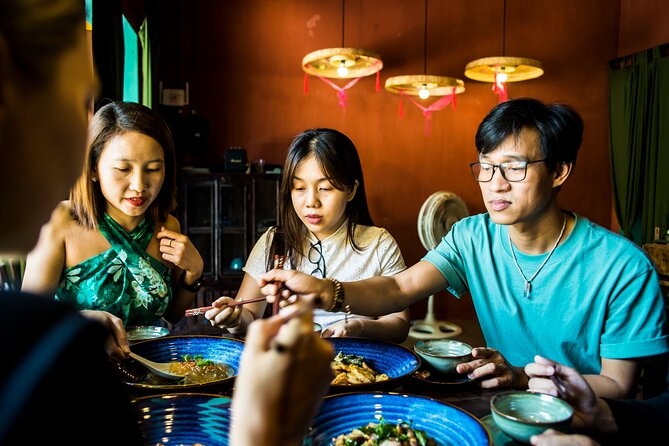
Hoi An’s food scene is changing fast, and this three-hour electric-car tour takes you beyond the usual noodle bowls and market snacks. You’ll meet local food makers, chefs, and small business owners while sampling modern Vietnamese dishes, fusion creations, drinks, and homemade products.
I like the way the tour connects food with sustainability and community work, rather than treating each bite as an isolated tasting. I also like the ride through rice fields between Hoi An and Cam Thanh, which gives you a look at the town’s quieter edges. The main drawback is simple: this is not a classic Vietnamese food tour, so you should book elsewhere if you want a full meal built around traditional specialties.
Key points to know before booking
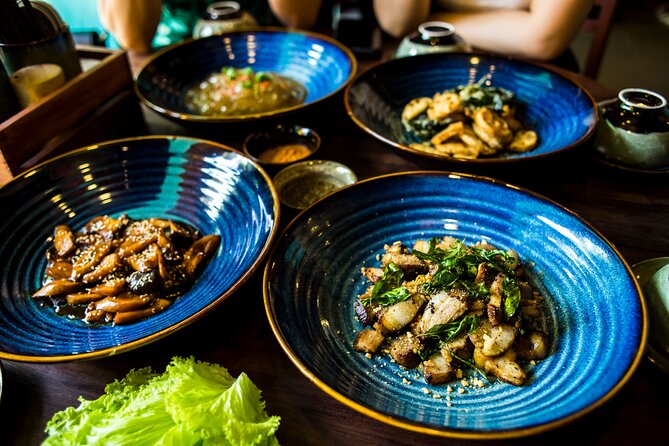
- Modern food instead of traditional dishes: Expect new Vietnamese cooking, fusion flavors, drinks, and homemade products.
- Electric-car transport: You travel between stops without spending the afternoon on foot, with rice-field views along the way.
- Small group size: The tour accepts no more than 10 people, allowing more room for questions and conversation.
- People behind the food: You may meet chefs, business owners, a fermentation specialist, and others working on local projects.
- A wider view of Hoi An: Stops can include a riverside café supporting people with disadvantages and a private gallery focused on art from ethnic communities around Vietnam.
- Minimum of two people: A solo booking can be moved or refunded if the minimum group size is not reached.
Hoi An beyond cao lầu and market snacks
Many food tours in Hoi An focus on familiar local dishes. This one takes another route. It looks at what people are cooking, making, and building now, with food used as an entry point into the city’s current cultural life.
That distinction matters. You won’t come away with a long list of traditional recipes or a full survey of central Vietnamese cuisine. Instead, you’ll see how local ingredients are being used in newer ways, from modern Vietnamese plates to drinks and fermented products.
I find that approach useful for repeat visitors and for anyone who has already explored Hoi An’s old-town food staples. It also suits people who want to meet the people behind a business, not simply arrive, eat, and move on.
The experience is designed around selected venues rather than a fixed restaurant crawl. That means the exact feel of the afternoon depends partly on which places are operating on your date, but the stated mix includes a modern Vietnamese restaurant, a riverside café, a fermentation specialist’s home, and a private art gallery.
More cooking classes in Hoi An:
- Cooking Class Hoi An:Local Market, Basket Boat, Fishing & Cooking
★ 5.0 · 3,660 reviews - Hoi An Cooking Class(Market,BasketBoat Crabfishing&Cooking Class)
★ 5.0 · 3,386 reviews - From Hoi An: Market Tour, Basket Boat Ride and Cooking Class
★ 4.8 · 2,208 reviews
Starting at Phan Chu Trinh at noon
You meet at XUE Jade Jewelry at 71 Đ. Phan Chu Trinh in Hoi An’s Old Town. The start time is 12:00 pm, so this works well as a midday plan rather than an evening food outing.
The meeting point is near public transportation, and the activity returns you to the same place at the end. That makes it easier to fit into a day of sightseeing. You can visit the old town before lunch, take the tour, and then continue on foot afterward without arranging a separate ride back.
The tour lasts about three hours. You should arrive ready to eat several small servings rather than expecting one large restaurant meal. The food may be substantial enough for some people to count as lunch, but the experience is better understood as a sequence of tastings and encounters.
Because the tour begins at midday, wear something comfortable for warm weather and allow a little flexibility afterward. The schedule includes several stops and transport between them, so it is not built around rushing from one tasting to the next.
Electric cars and the road to Cam Thanh
The electric car is more than a convenience. It lets you cover ground between the Old Town and Cam Thanh without turning the afternoon into a long walk. You can watch Hoi An change as the streets give way to quieter roads and rice fields.
That transition is one of the more appealing parts of the experience. The tour is not confined to the photogenic center. You get a brief look at the surroundings that support life outside the historic core, with open views between stops.
The transport also makes the tour manageable for people who prefer not to cycle or spend several hours walking. Most people can take part, and the group is limited to 10. That is small enough for questions, though you should not assume it will feel like a private tour.
The weather matters. The experience may be canceled in poor weather, with a different date or a full refund offered. If your Hoi An schedule is tight, keep that possibility in mind when choosing the day.
The modern Vietnamese restaurant and Tra Que influence
One selected stop is a small modern Vietnamese restaurant inspired by the organic herbs of Tra Que Village. Tra Que is known for its farming traditions, and the connection gives the food a clear local starting point even when the dishes are not traditional in form.
This is where the tour’s main idea comes into focus. You are not simply trying an unusual dish for novelty. You are seeing how familiar local ingredients can be handled in a more current style, with the story of the produce and the people using it included in the visit.
Expect fresh local ingredients and flavor combinations that may be less familiar than the dishes served at standard Hoi An eateries. The exact menu is not specified, so you should avoid booking if you need a guaranteed list of particular foods.
I like the scale of this stop. A small restaurant can give you a better sense of the people making the food than a large dining room designed mainly for quick service. It also fits the experience’s focus on independent businesses and changing food habits.
A completely different side of Hoi An:
- Hoi An: Basket Boat Ride in the Coconut Forest
★ 4.9 · 4,956 reviews - Hoi An: Vietnamese Coffee Culture and Coffee Making Class
★ 4.9 · 4,006 reviews - Hoi An: Vietnamese Foldable Lantern Making Class
★ 4.9 · 3,742 reviews - Hoi An: My Son Sanctuary Early Morning w. Champa Food Brunch
★ 4.9 · 2,750 reviews
The riverside café with a social purpose
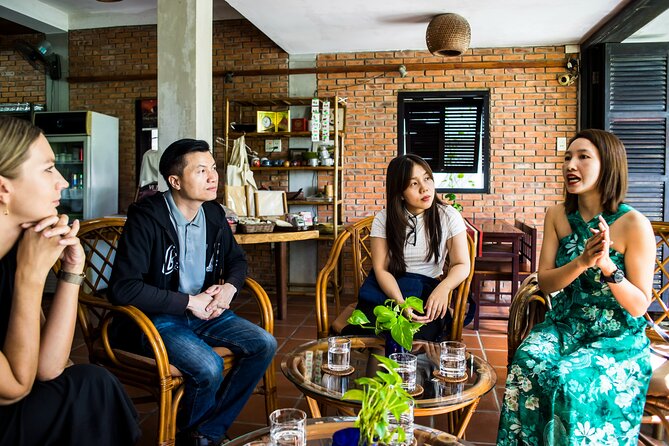
Another stop is a tasteful café by the river that supports people with disadvantages. That adds a social layer to the afternoon and gives you a chance to see how a food business can serve more than its customers.
The café is not presented simply as a scenic refreshment stop. Its connection to local people is part of the reason it has been selected. You can learn how community-minded work fits into Hoi An’s food and hospitality scene while enjoying the riverside setting.
This is an important difference from a standard tasting tour. Your spending is connected to places with a stated local purpose, and the host explains the people and ideas behind the venue. I would particularly recommend this part to you if responsible tourism matters as much as the food itself.
At the same time, keep your expectations measured. The tour does not promise a formal workshop or a long volunteer presentation. The value lies in meeting or hearing about the people involved and understanding the place in context.
Fermentation, homemade products, and local know-how
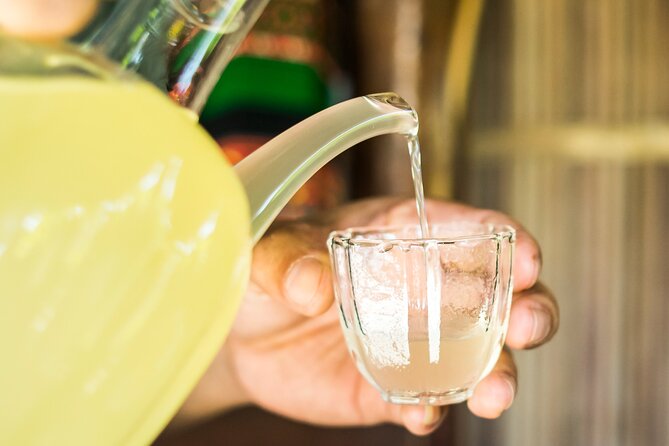
The experience can also take you to the home of a fermentation master. Fermentation is one of the most interesting ways to understand food culture because it depends on time, care, and practical knowledge rather than instant preparation.
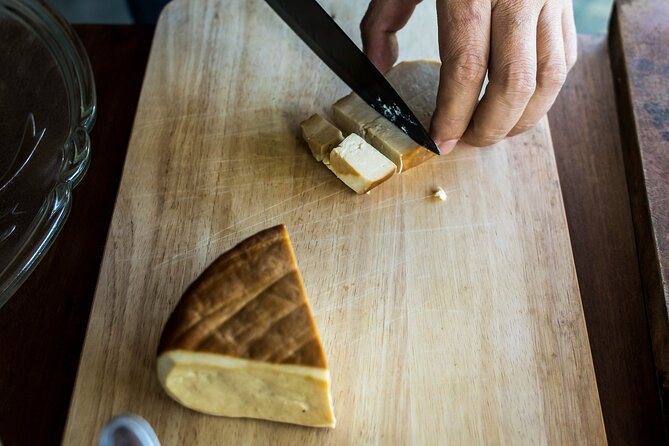
You may sample or learn about homemade products at this stop, though the precise items are not listed. The focus is on the process and the person behind it, not just on adding another tasting to the schedule.
For me, this is the kind of detail that can make a food experience memorable. A restaurant shows you a finished dish. A visit with a fermentation specialist can show you how flavor is developed before the dish ever reaches a table.
It is also a good fit for curious eaters who enjoy learning how food is made. If you want a polished sequence of restaurant courses with little explanation, this stop may feel slower and more conversational than you expect.
A private gallery and art from across Vietnam
The final part of the visit may include a private gallery filled with art collected from ethnic minority communities across Vietnam. This expands the tour beyond Hoi An’s immediate food scene and gives the host another way to discuss local identity and culture.
The gallery is private rather than a standard public attraction, which makes it feel different from simply ticking off another museum. The collection brings together work from communities around the country, not only from Hoi An or Quang Nam.
You should not expect a full museum tour or a detailed art-history lecture. The attraction here is the combination of setting, personal collection, and conversation. It is a useful counterpoint to the food stops, showing that modern Hoi An is also shaped by art, small businesses, and connections across Vietnam.
I like this broad definition of a culinary outing. Food does not exist apart from craft, place, work, and culture. Still, anyone who wants nonstop eating should know that this tour gives time to non-food subjects too.
What the guide adds to the afternoon
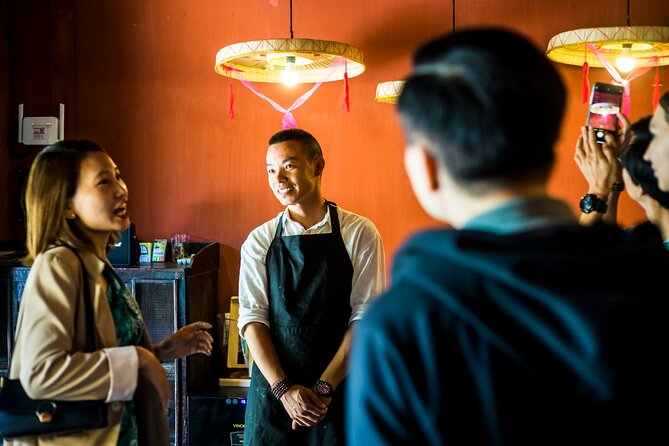
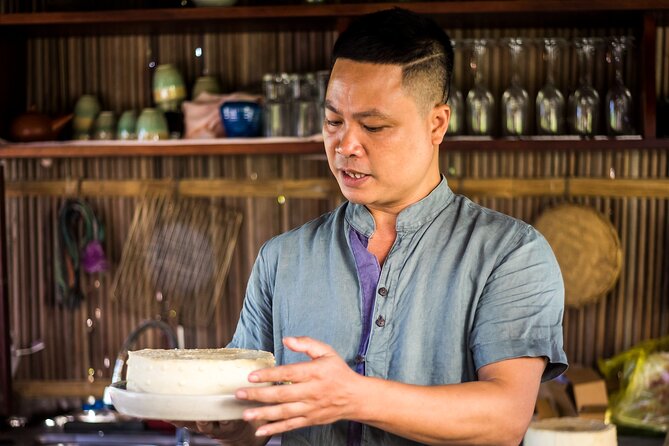
The host is central to the experience. You are not only being transported between venues. You are meant to hear stories about modern Hoi An, meet the people running each place, and understand the sustainable practices connected to the city.
Guide Tinh is specifically praised for being warm, friendly, and well informed about the places visited. If he leads your tour, his local storytelling may be one of the strongest parts of the afternoon. The value of a small-group experience often depends on how well the guide connects the stops, and this tour is built around that role.
The best questions to ask are practical ones: How does a business source its ingredients? What makes a product local? How does a café support people facing disadvantages? Which changes in Hoi An are helping or hurting small businesses?
Since the maximum group size is 10, you should have a reasonable chance to ask questions without holding up a large crowd. A group of that size can still vary in pace and interest, but it is more personal than a big bus tour.
Is $79 a fair price?
At $79 per person, this is not a cheap way to grab lunch in Hoi An. You are paying for more than the food. The price includes a three-hour hosted experience, transport by electric car, several selected stops, tastings, and access to places you might not find on your own.
The value is strongest if you care about context. You are paying to connect dishes and drinks with local producers, small businesses, sustainable methods, and community projects. You are also paying to avoid the time and guesswork involved in finding several suitable places across Hoi An and Cam Thanh.
The value is weaker if your main goal is quantity. The food list is not specified, and the experience does not promise traditional Hoi An dishes. Someone looking for a low-cost street-food lunch or a cooking class may get more from a different activity.
I would compare the price with a guided half-day cultural outing rather than with the cost of a meal. If the electric-car ride, personal stories, and unusual venues appeal to you, $79 can make sense. If you only want to eat, it is harder to justify.
The tour is often booked about 13 days ahead, so I would not leave it until the last moment if your dates are fixed. The minimum group requirement also matters. A booking for one person may be moved to another date if at least two people are not booked.
Who should book this Hoi An experience?
I would recommend it to you if you have already seen the main old-town sights and want a different angle on Hoi An. It is also a good choice for food-minded visitors who enjoy modern cooking, small producers, design, sustainability, and conversation.
It suits couples, friends, and solo visitors who are comfortable joining a small group. A solo booking is possible, but the activity needs at least two people to run. If that minimum is not reached, you can be offered another date or experience, or receive a full refund.
You should be open to food you cannot choose in advance. The experience includes carefully selected dishes, snacks, drinks, and homemade products, but it does not publish a fixed menu. That is part of the discovery, but it can be a limitation for people with strict dietary needs.
I would skip it if you want a traditional food survey, a cooking lesson, or a full evening meal. I would also skip it if your Hoi An visit is so short that every hour must go toward major landmarks. For a relaxed afternoon that links food with people and place, it makes a stronger case.
Final verdict: book for ideas, not just food
This is a thoughtful choice for seeing how Hoi An’s culinary identity is developing. The electric-car route, rice-field views, small businesses, fermentation work, social café, and private art collection give the afternoon more variety than a standard tasting walk.
The best reason to book is the chance to meet people working on new food and community projects. The main caution is that you must want a modern, story-led experience rather than a parade of traditional dishes.
I would book it for a second or third day in Hoi An, when you have time to look beyond the Old Town. At $79, it is a considered purchase, but the combination of transport, tastings, access, and local context gives it reasonable value for the right kind of visitor.
FAQ
Where does the Modern Culinary Experience in Hoi An start?
It starts at XUE Jade Jewelry, 71 Đ. Phan Chu Trinh, in Hoi An Old Town.
What time does the experience begin?
The start time is 12:00 pm.
How long does the experience last?
It lasts approximately three hours.
Where does the experience end?
It ends back at the meeting point in Hoi An Old Town.
Does the tour include traditional Vietnamese dishes?
No. The experience focuses on modern Vietnamese food, fusion dishes, drinks, snacks, and homemade products rather than traditional dishes.
How do you travel between the stops?
You travel between locations by electric car, including the route toward Cam Thanh and the surrounding rice fields.
What is the maximum group size?
The activity accepts a maximum of 10 people.
Can one person book the experience?
You can book for one person, but the experience requires at least two people to run. If the minimum is not reached, you may be offered another date or experience, or a full refund.
What happens if the weather is poor?
If poor weather causes the experience to be canceled, you will be offered a different date or a full refund.
Just added in Hoi An
- Hoi An: Ylang Ylang Spa Experience (Free pick up for 2pax++)★ 4.5 · 17 reviews
- Vietnamese Cooking Class with Local Family in Hoi An★ 4.9 · 20 reviews
- Hoi An Countryside Bicycle Tour : 25 Km Real Vietnam★ 5.0 · 12 reviews
- Vietnamese Coffee Making Class in Hoi An★ 5.0 · 4 reviews
- Vegetarian Cooking Class with Local Family in Hoi An★ 4.6 · 5 reviews
- Vegetarian Cooking Class W Optional Basket Boat from Hoi An★ 4.5 · 5 reviews
- My Son Sanctuary Private Tour – Early Morning or Half Day Tour★ 5.0 · 15 reviews
- Traditional Vietnamese Cooking Class in Leina Cookery★ 5.0 · 12 reviews
Hoi An Vietnamese Cooking Classes, compared.
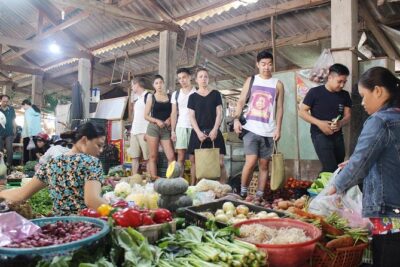
Cooking Class Hoi An:Local Market, Basket Boat, Fishing & Cooking
Read our review →
Hoi An Cooking Class(Market,BasketBoat Crabfishing&Cooking Class)
Read our review →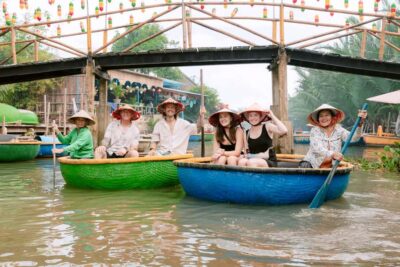
Market Tour, Basket Boat Ride and Cooking Class
Read our review →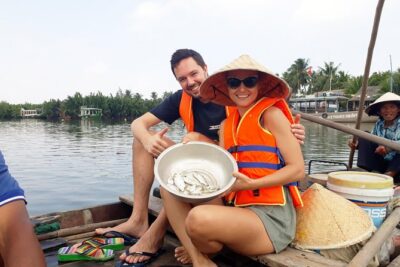
Hoi An Eco Tour Cooking Class & Fishing (Local market,basket boat,learn cooking)
Read our review →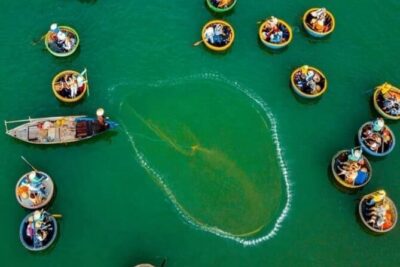
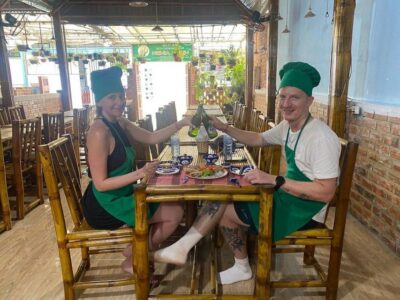
Traditional Cooking Class & meal with Local Family
Read our review →
Browse the lists this tour appears in