
Reviewed · HOI AN VIETNAMESE COOKING CLASSES
From Hoi An: Cooking Class at Organic Farm
The best part of this three-hour class is that the food begins in the garden. At Lemon Basil Cookery in Tra Que vegetable village, you first see the herbs and crops, then carry some of that farm produce into the kitchen. I like that direct farm-to-table link, and I like the small group size, limited to 10 people, which gives the cooking a friendly, personal feel.
I also like the way the class mixes practical cooking with family hospitality. Min is frequently praised for being funny and clear, while her aunt, uncle, or other family members may help with the garden and cooking. The one point to plan around is transport: you must reach the restaurant independently, and the class can run closer to three and a half hours than three.
Key points at a glance
- Farm work comes first: Tour the organic garden, taste herbs, and take part in simple planting or watering tasks.
- Four Vietnamese dishes: Prepare Tra Que spring rolls, green papaya salad, fish in a clay pot, and bánh xèo.
- A genuinely small class: Groups are capped at 10, with several sessions described as having only six people.
- Min brings the humor: Expect clear instruction, plenty of jokes, and an easygoing family atmosphere.
- Dietary requests are possible: Tell the hosts about allergies, intolerances, or food preferences in advance.
- Good value at $27: The price covers the farm tour, ingredients, cooking, shared meal, English instruction, and a completion certificate.
Starting among the herbs of Tra Que village
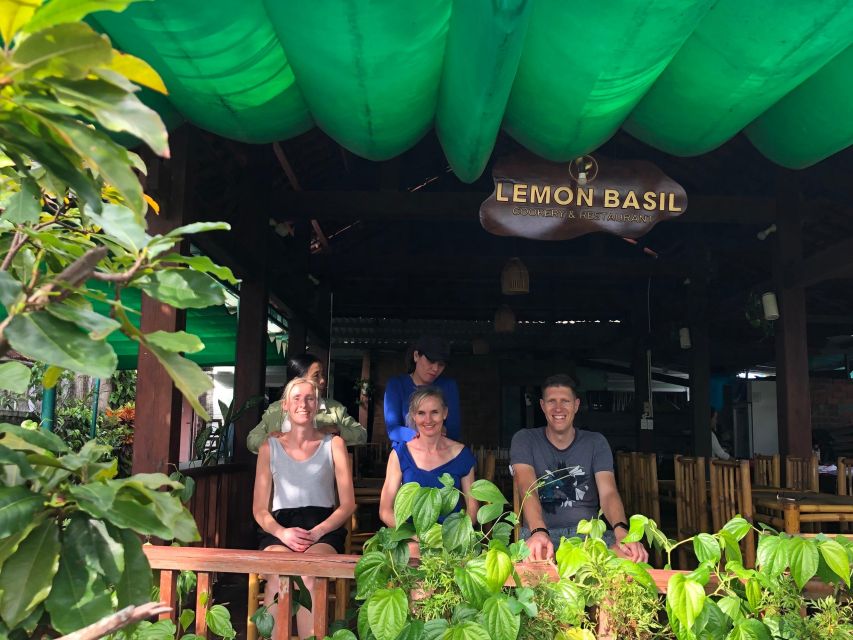
Lemon Basil Cookery and Restaurant sits in the heart of Tra Que vegetable village, a peaceful spot just beyond Hoi An’s busiest streets. The meeting point is easy to identify by its signage, and the setting gives you a quick change of pace from the old town.
You do not simply arrive at a restaurant kitchen and start chopping. The class begins with an introduction to the farm and its crops. You may see and taste a range of herbs, vegetables, and other produce grown by the family. Several participants have also helped plant greens, water crops, or learn how the soil is prepared.
That opening matters. Vietnamese cooking can look simple on the plate, but its character comes from fresh herbs, sharp vegetables, fish sauce, rice products, and careful balance. Seeing the ingredients where they grow helps you understand why a handful of herbs or a crisp vegetable garnish can change the whole dish.
The farm visit is also the most distinctive part of this experience. Plenty of cooking classes teach you how to make spring rolls. Fewer begin by showing you the garden that supplies the ingredients. If you enjoy local food systems and small-scale farming, allow yourself time to notice the planting beds rather than treating the tour as a quick introduction.
More cooking classes in Hoi An:
- Cooking Class Hoi An:Local Market, Basket Boat, Fishing & Cooking
★ 5.0 · 3,660 reviews - Hoi An Cooking Class(Market,BasketBoat Crabfishing&Cooking Class)
★ 5.0 · 3,386 reviews - From Hoi An: Market Tour, Basket Boat Ride and Cooking Class
★ 4.8 · 2,208 reviews
Meeting Min and the family team
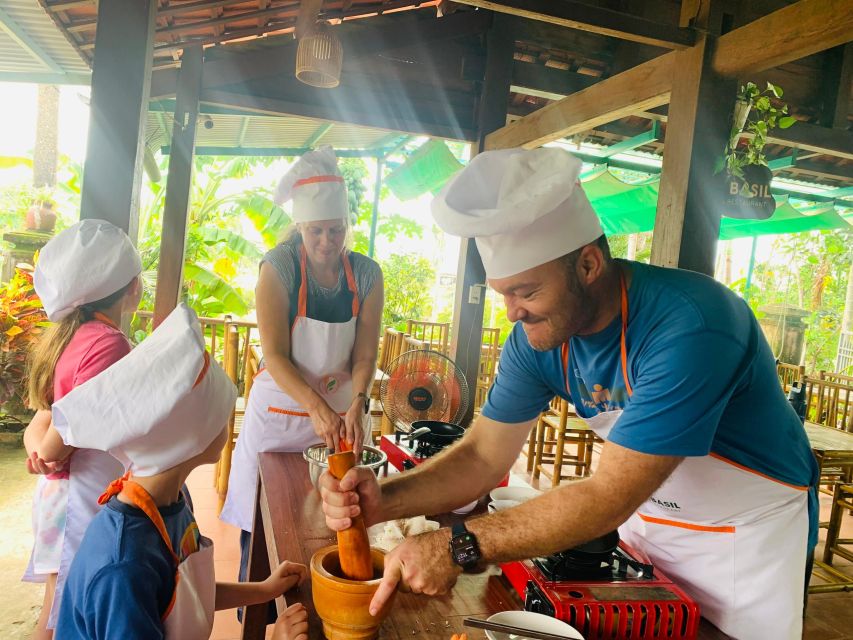
The class is led in English, and Min is the name most closely associated with the experience. Her teaching style comes across as warm, active, and playful. You can expect explanations of ingredients and methods, but also jokes and side comments that keep the pace relaxed.
The family connection is important here. The farm and cookery are presented as a family operation, and the uncle has helped demonstrate soil preparation and planting. In some sessions, an aunt and uncle have also joined the cooking and welcomed the group into their home and farm setting.
You may also encounter Jessica as one of the hosts. The exact person guiding your class can vary, but the format remains the same: English instruction, hands-on preparation, and a close connection to the family garden.
I would choose this class if you prefer a host who works beside you rather than a formal chef demonstrating from a distance. You should still expect instruction on cutting, mixing, rolling, seasoning, and cooking. The tone is simply more relaxed than a polished restaurant lesson.
The four-dish cooking session
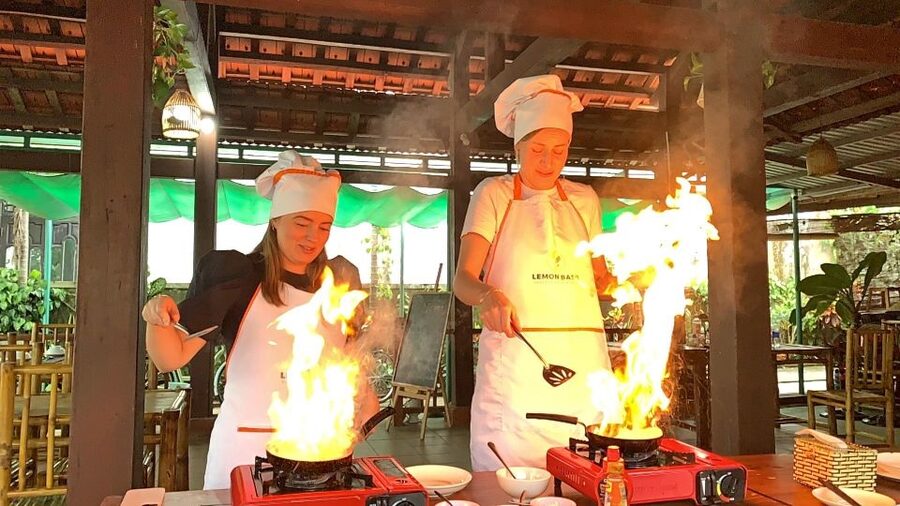
After the farm visit, you move to the kitchen and prepare four Vietnamese dishes. The order may vary, but the menu covers several important parts of the country’s everyday cooking.
Tra Que spring rolls
The spring rolls connect the farm visit to the meal. You work with fresh vegetables and herbs, learning how to assemble and handle the ingredients so the rolls hold together.
The menu information calls these Tra Que spring rolls, while one participant described preparing crispy spring rolls. That suggests the exact style can depend on the session and the ingredients available. Ask your instructor if you want to know whether your group is making fresh rolls, fried rolls, or both.
This is a good first dish because it lets you get comfortable with Vietnamese flavors before moving to hot pans and clay pots. It also gives you a chance to notice how herbs and raw vegetables provide freshness and crunch.
A completely different side of Hoi An:
- Hoi An: Basket Boat Ride in the Coconut Forest
★ 4.9 · 4,956 reviews - Hoi An: Vietnamese Coffee Culture and Coffee Making Class
★ 4.9 · 4,006 reviews - Hoi An: Vietnamese Foldable Lantern Making Class
★ 4.9 · 3,742 reviews - Hoi An: My Son Sanctuary Early Morning w. Champa Food Brunch
★ 4.9 · 2,750 reviews
Green papaya salad
The green papaya salad brings acidity, sweetness, heat, and texture into one bowl. The important lesson is not just following a recipe. It is learning to balance the dressing until it suits the ingredients.
One session included chicken papaya salad, so the protein can vary. The listed menu names green papaya salad without specifying meat in every case. If you have dietary restrictions, tell the hosts before you arrive so they can discuss a suitable version.
This dish is especially useful for home cooks because it teaches a flexible method. Once you understand the balance of flavors, you can adapt the salad to ingredients available in your own kitchen.
Fish in a clay pot
Fish cooked in a clay pot gives the class a warmer, more savory dish. The method shows how Vietnamese cooking builds flavor through seasoning and gentle cooking rather than relying on complicated equipment.
The ingredients provided include fish for this dish, and one session used basa fillet. You do not need previous cooking experience. The chef guides you through the preparation, then helps you manage the cooking process.
For some people, this will be the least familiar recipe of the four. That is part of its value. You are not simply making another version of a dish you already know from home. You are learning a traditional Vietnamese approach to fish and seasoning in a practical way.
Bánh xèo, the crispy Vietnamese pancake
The bánh xèo is likely to be the most entertaining dish to prepare. This crisp Vietnamese pancake requires attention to batter, heat, fillings, and the final fold. Flipping it well may take a little practice.
One participant admitted that shaping and flipping pancakes was not easy, even with cooking experience. That is useful to know before you arrive. The class is meant to be hands-on, so your pancake may not look perfect. It will still be part of the fun, and the instructor can show you how to improve the texture and fold.
The result is a dish that combines crisp edges with fresh herbs and vegetables. It also gives you one of the clearest lessons in Vietnamese cooking: texture matters as much as flavor.
What the three hours feel like
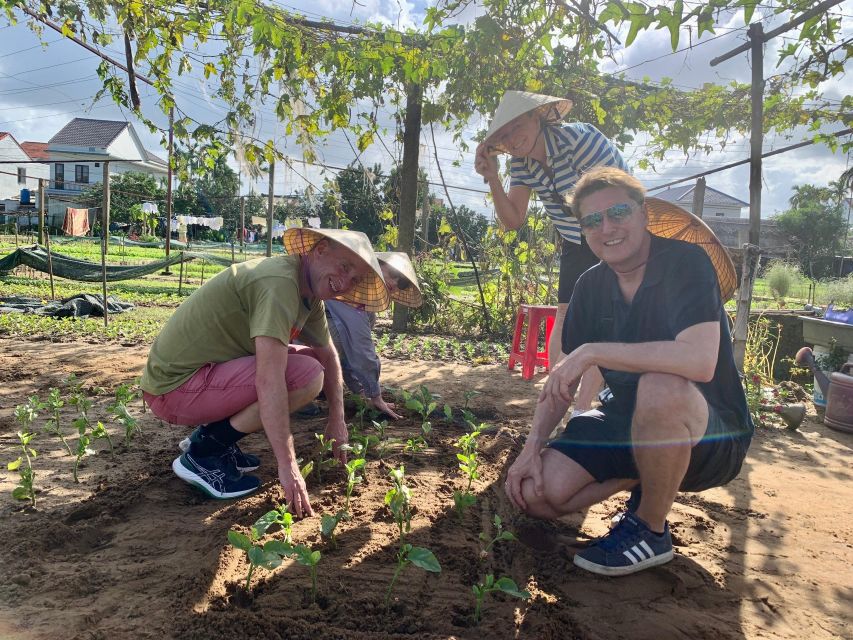
The class is active, but it is not an exhausting cooking marathon. You begin with the farm, take part in small tasks, and then work through the recipes with guidance. The total time is listed as three hours, though the practical estimate is about three to three and a half hours.
That extra half-hour matters if you have another booking immediately afterward. I would not schedule a tight airport transfer, fixed tour, or restaurant reservation right after the class. You want enough time for the cooking, shared meal, photos, and final certificate without watching the clock.
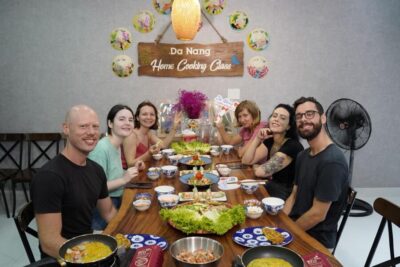
The small group limit of 10 is another practical advantage. A group of six has been described, and that size should give you more chances to ask questions and work directly with the instructor. The kitchen remains social, though. You cook alongside other people, share tasks, and eat together at the end.
This is not the right format if you want a private lesson with every step tailored only to you. It is a communal experience by design. That makes it a good choice for solo visitors, couples, families, and people who enjoy meeting others around a table.
Eating what you have prepared
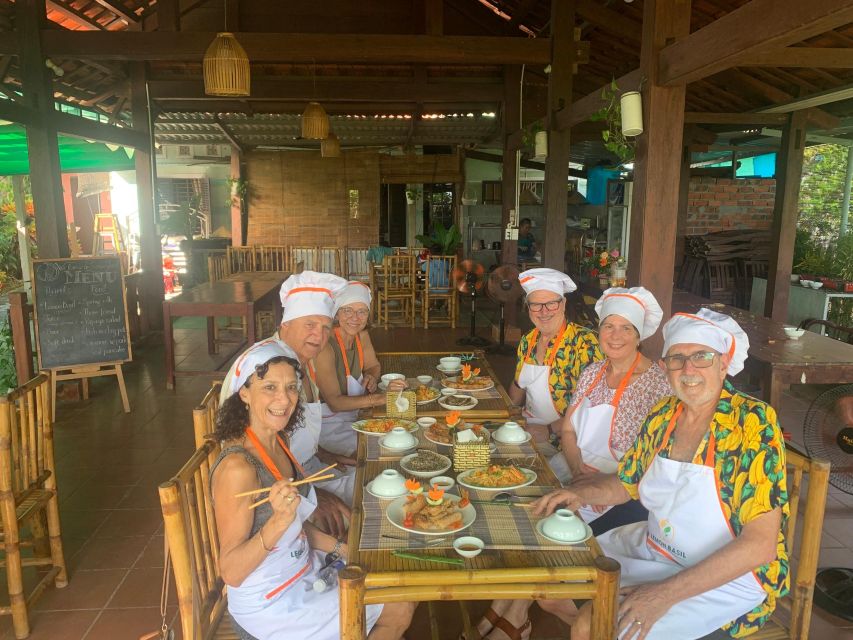
The meal is the reward for the work, but it is also part of the lesson. You eat the spring rolls, papaya salad, fish, and bánh xèo together in a communal setting.
You may find that the portions are generous enough to make this a full meal. One participant finished the class feeling ready to skip dinner, and another session ended with fresh fruit such as mango, pink jackfruit, and lychees. Fruit is not listed as a guaranteed inclusion, so treat it as a possible extra rather than part of the promised menu.
Eating together helps you compare the dishes and see how they fit as a Vietnamese meal. The food is not served as four isolated recipes. Fresh herbs, salad, fish, and pancake work together through contrast: crisp and soft, fresh and savory, sharp and mild.
Additional food and drinks are not included, so budget for anything beyond the prepared dishes. The listed price covers the cooking ingredients and communal meal, not unmentioned extras.
Dietary needs and cooking ability
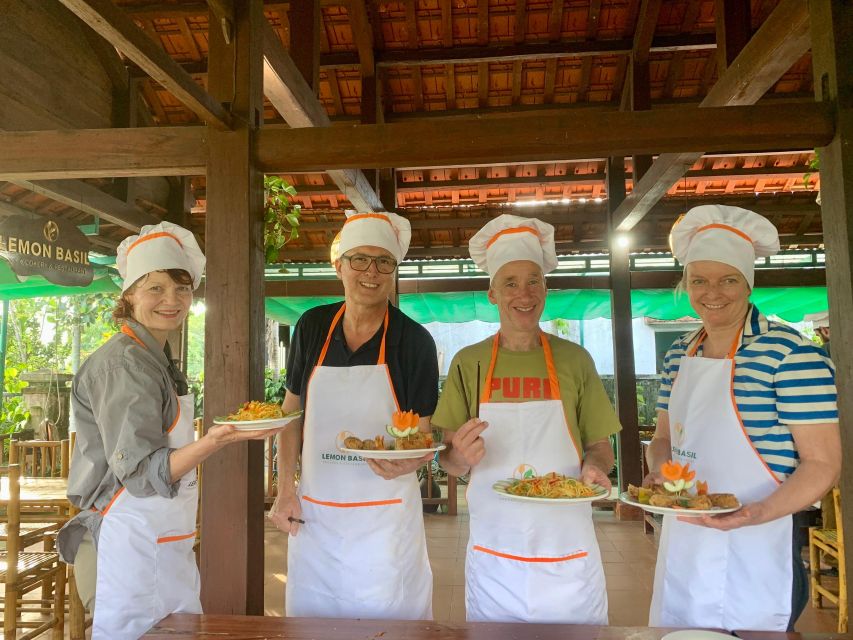
You do not need prior cooking experience. The instructions are intended for all skill levels, and the class gives you support with basic preparation as well as more demanding tasks such as flipping bánh xèo.
Dietary communication is important. The hosts ask about allergies and intolerances, and several sessions have adjusted the food successfully. A pork-free menu was accommodated, and other requests were taken into account.
Still, you should provide this information in advance rather than waiting until the cooking begins. The menu includes fish, and one version of the papaya salad included chicken. If you avoid animal products or have a serious allergy, ask the provider what substitutions are available before booking.
The class also suits people who already cook. You may know how to chop or season, but Vietnamese herbs, dressings, clay-pot fish, and pancake technique give you new material to work with. The experience is not limited to complete beginners.
What the $27 price really covers
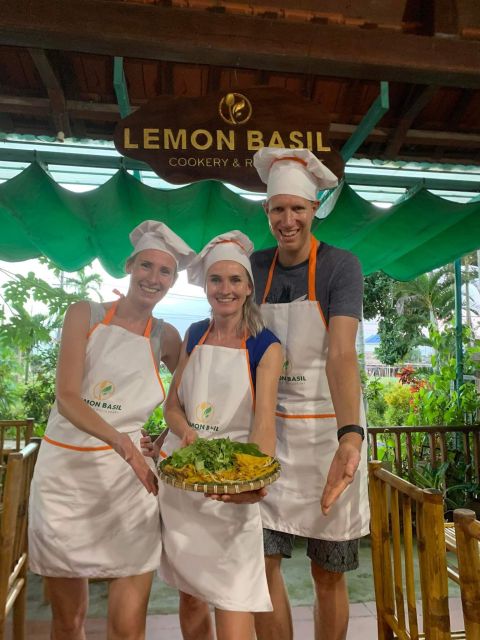
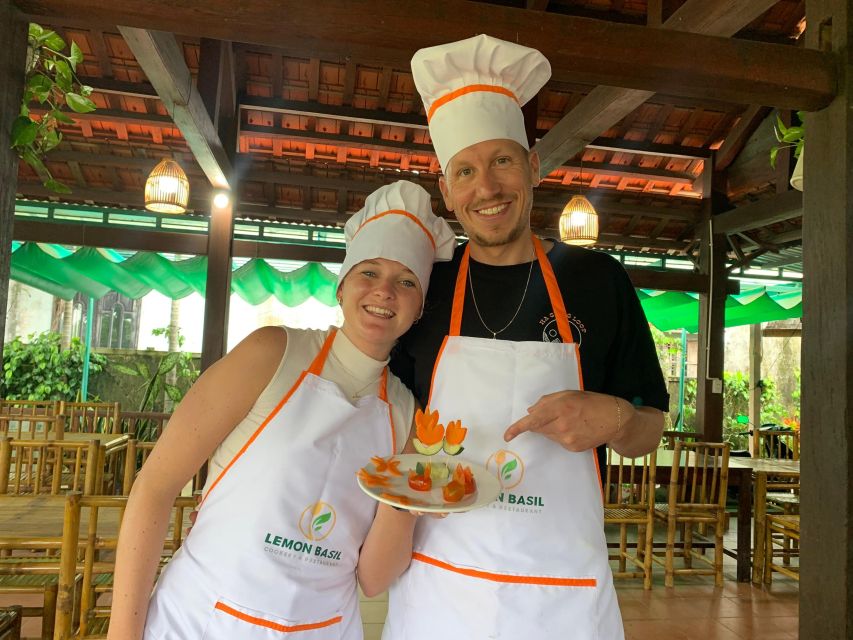
At $27 per person, this is a strong-value half-day activity in Hoi An. You are paying for more than a meal. The fee includes the organic farm tour, ingredients for four dishes, English-speaking instruction, hands-on cooking, communal dining, and a certificate of completion.
The farm visit is what strengthens the value. A standard cooking demonstration might cost less, but it would not give you the same connection to the crops or the family’s growing methods. Here, the price also covers an introduction to local agriculture and the chance to take part in simple farm work.
You should not compare the cost with a restaurant meal alone. Compare it with a meal, a guided cultural activity, and practical instruction combined. For $27, that package is appealing, especially if you want something beyond Hoi An’s old-town streets.
The main extra cost is getting there. Transportation to and from Lemon Basil Cookery is not included. You must arrange your own way to Tra Que village, then return independently after the class. The location also makes sense if you plan to continue exploring the village or cycle around the area afterward.
Getting there and planning your time
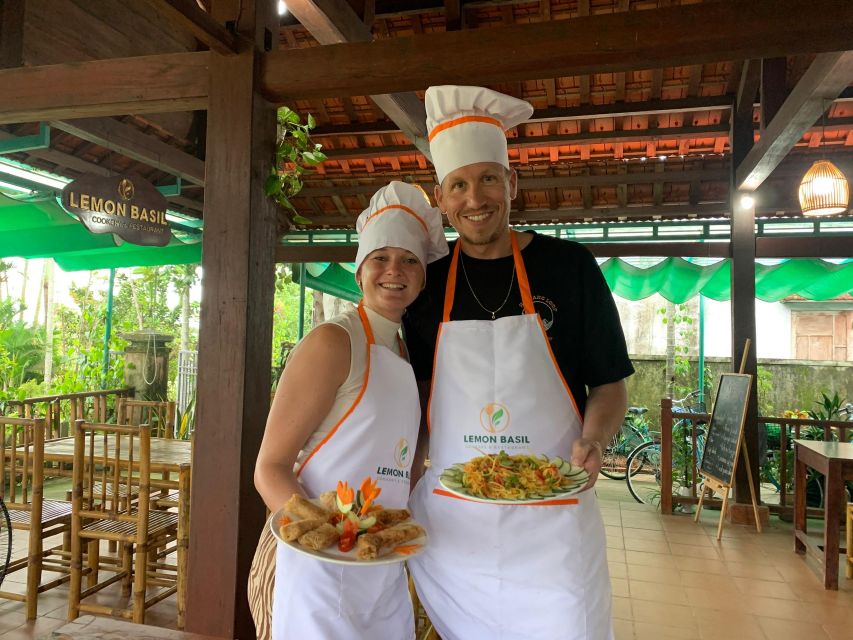
The meeting point is Lemon Basil Cookery and Restaurant in Tra Que vegetable village. The provider does not include pickup, so check your route before booking and allow time to arrive 5 to 10 minutes early.
The setting is useful for a broader Hoi An day. You could pair the class with time in Tra Que, a coffee stop, or independent exploration of the surrounding village area. Do not assume the class will collect you from your hotel or take you onward afterward.
The location is part of the appeal, but it also means this is not a door-to-door tour. If you want a fully arranged experience with transfers included, you will need to look elsewhere or organize transport yourself.
The schedule has different starting times depending on availability. Confirm the start time when you book, especially if you are working around a lantern evening, beach visit, or another Hoi An activity.
Who should book this class
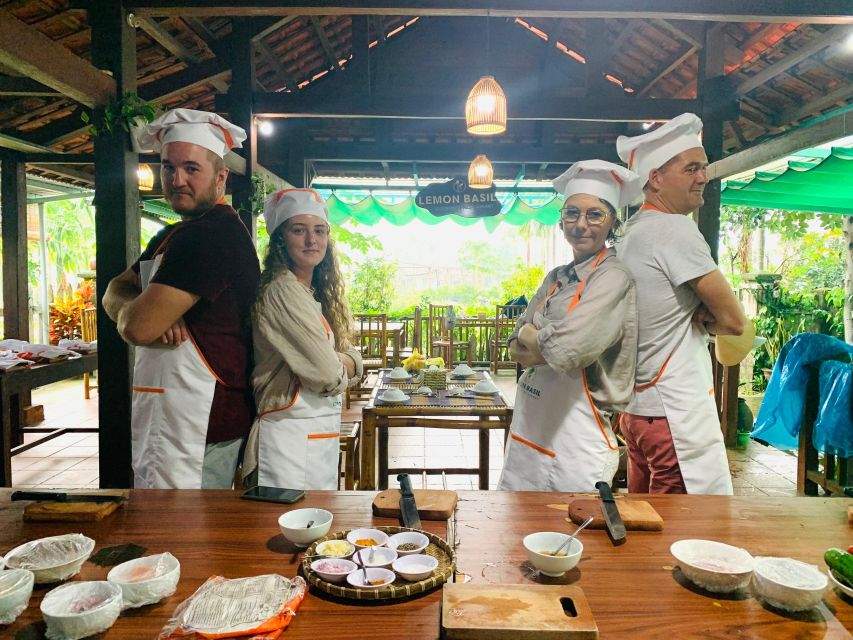
I would recommend it most strongly to people who want food connected to place. You see the crops, handle the ingredients, cook the dishes, and eat them with the group. That sequence feels more meaningful than simply watching a chef prepare lunch.
It is also a good match for:
- Couples seeking a relaxed shared activity
- Solo visitors who want a social meal
- Families with older children who can take part in cooking
- Home cooks interested in Vietnamese methods
- Beginners who want clear guidance
- People with manageable dietary restrictions who can notify the hosts early
You may want to skip it if you dislike communal dining, do not want to participate in practical farm tasks, or need a strictly timed activity. The informal family style is a strength for many people, but it may feel less polished than a formal culinary school.
The class has received a rating of 5 from 40 reviews, and the strongest praise centers on the food, the family welcome, Min’s humor, and the hands-on farm work. Those are the features I would use to decide if the experience fits you. The certificate is a nice finish, but the garden, cooking, and shared meal are the real reasons to go.
Final recommendation
Book this class if you want a friendly, practical look at Vietnamese food in a farm setting rather than a restaurant-only demonstration. At $27, the combination of four dishes, fresh ingredients, farm access, English instruction, and a communal meal offers good value.
Plan your own transport, arrive early, flag dietary needs in advance, and leave at least three and a half hours free. If you do that, Lemon Basil Cookery gives you a useful taste of Tra Que life, plus recipes you can try again after you leave Hoi An.
FAQ
How long does the Lemon Basil cooking class last?
The class lasts about three hours, with the practical estimate given as approximately three to three and a half hours.
Where does the cooking class meet?
It meets at Lemon Basil Cookery and Restaurant in the heart of Tra Que vegetable village.
Is transportation included?
No. Pickup and return transportation are not included, so you need to reach the restaurant independently.
Which dishes will I cook?
You will prepare Tra Que spring rolls, green papaya salad, fish in a clay pot, and Vietnamese crispy pancake, also called bánh xèo.
Is the class taught in English?
Yes. The instructors speak English.
Do I need cooking experience?
No. The class is suitable for all skill levels, and no previous cooking expertise is required.
Can dietary restrictions be accommodated?
Dietary requests, allergies, and intolerances can be considered. Tell the hosts in advance so they can plan suitable ingredients or substitutions.
How many people are in the group?
The group is limited to 10 participants. Some sessions may be smaller.
What is included in the $27 price?
The price includes the farm tour, ingredients for the four dishes, hands-on cooking with an English-speaking chef, communal dining, and a certificate of completion.
Can I cancel the booking?
You can cancel up to 24 hours in advance for a full refund. Reserve now and pay later is also available.
More Hands-on Workshops in Hoi An
- Hoi An Full Lantern Making Class- A special Foldable lantern
★ 5.0 · 2,007 reviews - Hoi An Cooking Class(Local market,Basket Boat,Fishing & Cooking)
★ 5.0 · 1,323 reviews - Hoi An: Basket Boat Ride, Cooking Class by Hangcoconut
★ 4.9 · 802 reviews - Hoi An Eco Tour Cooking Class & Fishing (Local market,basket boat,learn cooking)
★ 5.0 · 567 reviews
Just added in Hoi An
- Hoi An: Ylang Ylang Spa Experience (Free pick up for 2pax++)★ 4.5 · 17 reviews
- Vietnamese Cooking Class with Local Family in Hoi An★ 4.9 · 20 reviews
- Hoi An Countryside Bicycle Tour : 25 Km Real Vietnam★ 5.0 · 12 reviews
- Vietnamese Coffee Making Class in Hoi An★ 5.0 · 4 reviews
- Vegetarian Cooking Class with Local Family in Hoi An★ 4.6 · 5 reviews
- Vegetarian Cooking Class W Optional Basket Boat from Hoi An★ 4.5 · 5 reviews
- My Son Sanctuary Private Tour – Early Morning or Half Day Tour★ 5.0 · 15 reviews
- Traditional Vietnamese Cooking Class in Leina Cookery★ 5.0 · 12 reviews
Hoi An Vietnamese Cooking Classes, compared.
Cooking Class Hoi An:Local Market, Basket Boat, Fishing & Cooking
Read our review →
Hoi An Cooking Class(Market,BasketBoat Crabfishing&Cooking Class)
Read our review →
Market Tour, Basket Boat Ride and Cooking Class
Read our review →
Hoi An Eco Tour Cooking Class & Fishing (Local market,basket boat,learn cooking)
Read our review →
Traditional Cooking Class & meal with Local Family
Read our review →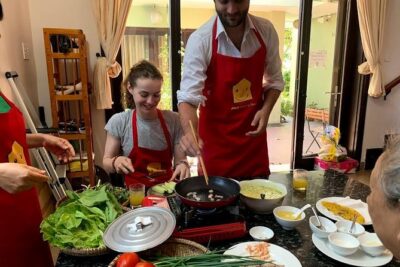
Browse the lists this tour appears in