
Reviewed · HOI AN ANCIENT TOWN WALKING TOURS
Hoian Old Town – Immersive Free Walking Tour
Hoi An reveals itself best at walking speed. This two-hour small-group tour leads you from the old town’s Japanese Covered Bridge through historic homes, assembly halls, a traditional art performance, and the central market. You get the main sights without spending half the day on a formal bus tour.
I like the limited group of five, which should make it easier to ask questions and hear the English-speaking guide. I also like the local focus: the walk is built around stories about Chinese, Japanese, Portuguese, and European traders who shaped this former port.
The main consideration is cost. The tour is promoted at $10 per person, but it also operates on a tip basis, with 250,000 VND suggested for a nice experience and 300,000 to 400,000 VND for a great one. You should also budget 120,000 VND, about $5, for the UNESCO attraction ticket.
Key points at a glance

- A compact route through Hoi An’s old town: The walk begins at 125 Phan Chu Trinh and finishes at Hoi An Market.
- Small group size: No more than five participants, useful for questions and easier conversation.
- Four major stops: The route includes the Japanese Covered Bridge, Tan Ky Old House, Fujian Assembly Hall, and the traditional art theatre.
- A 45-minute cultural performance: The theatre visit includes traditional music, dance, and other stage performances.
- A local English-speaking guide: Quoc Le is listed as the experience provider, and the tour focuses on stories tied to Hoi An’s past.
- Rain or shine: Bring comfortable clothing and plan for the walk to operate in wet weather too.
Why Hoi An makes such a good walking tour
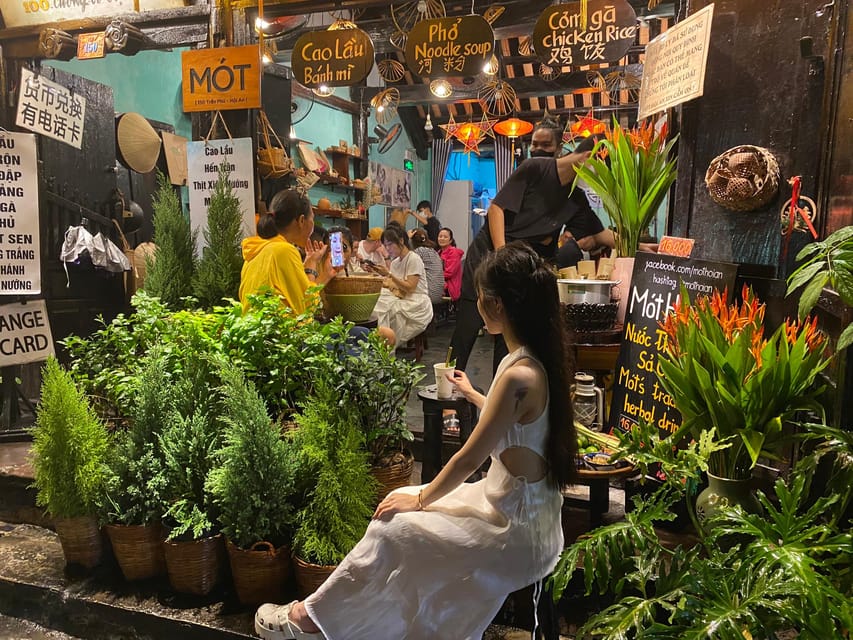
Hoi An is a UNESCO World Heritage town in central Vietnam, known for its old streets and preserved buildings from its trading-port years. From the 16th century onward, Chinese, Japanese, Portuguese, and European merchants passed through here, leaving behind a mix of architectural and cultural influences.
You can walk the old town alone, but a guide helps you read the details. A wooden house is more useful when you know why it was built with a narrow frontage, how merchant families used its rooms, or which foreign trading communities gathered in a particular assembly hall.
This tour is not designed as an exhaustive history lesson. It gives you a brisk introduction to the central sights, with short visits at several landmarks and a longer stop for traditional performance. For a first look at Hoi An, that balance works well. You see the key symbols, hear local context, and finish near the market, where you can continue on your own.
The advertised group limit is five people. That matters in Hoi An, where the streets can feel crowded and some historic interiors are small. A tiny group also gives you a better chance to ask about food, customs, nearby sights, and the practical side of exploring the town.
More Ancient Town walks in Hoi An:
- Hoi An Ancient Town Walking Tour with a Local
★ 5.0 · 517 reviews - The Lantern Lady: Traditional Lantern Class in Old Town
★ 4.9 · 444 reviews - Hoi An Ancient Town – Walking Tour with Local Guide
★ 4.9 · 385 reviews
Starting at 125 Phan Chu Trinh
The meeting point is 125 Phan Chu Trinh. Look for the guide wearing a white T-shirt and carrying a shoulder bag. This simple description is useful because the old town has plenty of people moving between shops, houses, and attractions.
The tour is conducted in English. Quoc Le is named as the provider, but the information does not give a separate guide name, so you should not assume Quoc Le will personally lead every departure.
Wear comfortable clothes and shoes suitable for two hours on foot. The clothing guidance also asks you to avoid loose or see-through clothing. Since the tour runs rain or shine, a compact rain layer is sensible during wet weather, though the activity information does not specify that rain gear is provided.
If you are new to Hoi An, joining early in your stay has a practical advantage. The guide can point you toward local food, nearby sights, and ways to use the old town after the walk ends. The tour information specifically suggests taking it soon after arrival for those local pointers.
The Japanese Covered Bridge and its pagoda
The Japanese Covered Bridge is the route’s first major landmark. It is one of Hoi An’s most recognizable structures and reflects the Japanese presence in the old trading port.
The stop lasts about 10 minutes, so expect an introduction and sightseeing rather than an extended architectural study. The bridge is also referred to as the Japanese Covered Bridge Pagoda, a reminder that this is more than a crossing. It is a cultural marker tied to the town’s international past.
A guide adds value here by explaining how Hoi An’s Japanese and Chinese communities fit into the larger port. Without that context, the bridge can become just another photo stop. With it, you begin to see the old town as a place where different trading cultures met and worked.
The attraction ticket issue matters at this point. Access to UNESCO attractions requires a ticket priced at 120,000 VND, or about $5. The supplied information does not clearly state how many individual sites that ticket covers, so confirm the current ticket arrangement with the guide before you enter several paid buildings.
Tan Ky Old House and the merchant past
The itinerary lists Old House of Tan Ky as a 10-minute stop. The wider tour information also refers to Phung Hung Ancient House and a Japanese Culture Ancient House, so the exact buildings included can vary from the short itinerary summary.
Tan Ky is one of Hoi An’s best-known old merchant houses. On this tour, the point is not simply to look at old beams and tiled courtyards. It is to understand how a trading family lived and worked inside a long, narrow house shaped by the town’s commercial streets.
Ten minutes is enough for an overview, but not for a slow architectural study. If historic interiors interest you, pay close attention and ask questions while you are there. The guide’s local stories are likely to be more useful than a quick photograph alone.
The reference to Phung Hung Ancient House is worth noting for planning. It is listed among the places connected with the walk, but the timed itinerary specifically names Tan Ky Old House. Ask at the meeting point which house will be entered on your departure. That small check prevents confusion if you have seen both names while planning.
More walking tours in Hoi An:
- Evening Walking Food Tour, folk game and lantern boat
★ 5.0 · 665 reviews - Hoi An Street Food Walking Tour with Tastings
★ 5.0 · 317 reviews - Hoi An Walking Tour
★ 5.0 · 269 reviews - Cham Island: Underwater Walking & Snorkeling Tour
★ 4.4 · 112 reviews
Forty-five minutes of traditional performance
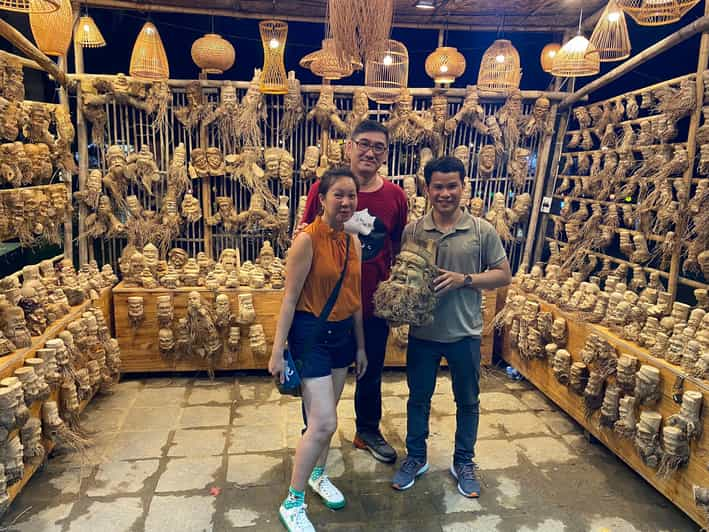
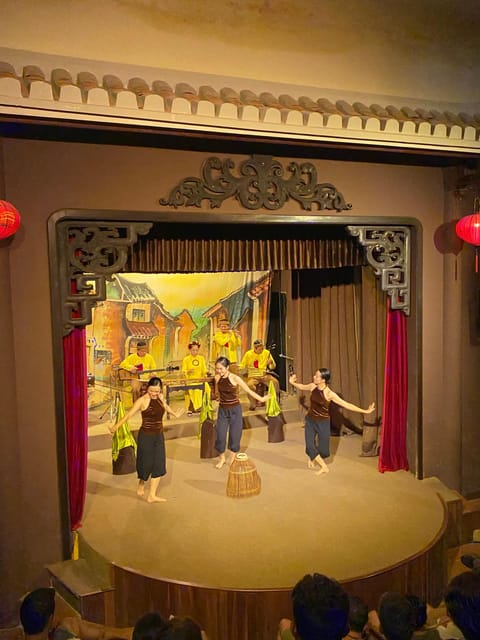
The longest stop is the Hoi An Traditional Art Performance Theatre, with about 45 minutes set aside for a concert and dance show. This gives the tour a welcome change of pace after the short outdoor visits.
A traditional performance can show you parts of local culture that are easy to miss while walking from building to building. Music, movement, and stage presentation offer a different way to understand the region than architecture does.
This is also the part of the tour most likely to shape the overall pace. Nearly half the two-hour outing is spent in the theatre, leaving roughly 75 minutes for the other listed stops and the walking between them. If your main goal is photography or extended time inside old houses, the performance means less time at each building.
I see that as a tradeoff rather than a flaw. You are not only ticking off landmarks. You are also getting a planned cultural show, which is useful if you have limited time in Hoi An or do not know which performance venue to choose independently.
The description calls the venue a Performance Art Center and a Traditional Art Performance House in different places. These appear to refer to the same cultural portion of the tour, but you can confirm the exact venue with the guide.
Fujian Assembly Hall and the town’s Chinese connections
The route next visits Fujian Assembly Hall for about 10 minutes. The broader description also mentions the Cantonese Assembly Hall, so the names should be checked at the start of the walk. The timed route identifies Fujian Assembly Hall, while the included places list Cantonese Assembly Hall.
Assembly halls were important gathering places for Chinese communities living and trading in Hoi An. They connect the town’s architecture to the people who used it, not just to the building’s decorative features.
This short stop is most valuable when the guide explains the community behind the hall. You can look at the entrance, carvings, and layout, but the historical reason for the building matters more than a quick visual inspection.
Ten minutes will not cover every feature. Still, in a compact introduction to Hoi An, a short stop here helps complete the picture started at the Japanese Covered Bridge. You move from Japanese influence to Chinese community life, then toward the market and the town’s everyday food culture.
Kazik Park, Phung Hung House, and the changing route details
Kazik Park and Phung Hung Ancient House appear in the list of places associated with the tour, although they are not given separate timings in the short itinerary. This is important if you are booking because of one particular building.
The most accurate expectation is a guided route through several old-town landmarks, not a guaranteed long visit at every named site. The timed schedule gives clear attention to the Japanese Covered Bridge, Tan Ky Old House, the theatre, and Fujian Assembly Hall. The other places may be seen or discussed as the route develops.
Kazik Park adds an outdoor pause to a walk otherwise centered on historic buildings. Phung Hung Ancient House offers another chance to see how old homes fit into Hoi An’s merchant tradition. If either one is essential to your plans, ask before setting out.
This kind of clarification is especially useful because Hoi An’s attractions often require a ticket, and opening arrangements can affect the route. The tour operates rain or shine, but weather or local access rules may also influence how long you spend outdoors or inside.
Finishing at Hoi An Central Market
The walk ends at Hoi An Market, a practical finish for anyone interested in food. The highlights specifically point to specialties of the sea and the surrounding scenery, although this is not described as a dedicated food tour or a separate tasting.
You should think of the market as the place where the historical walk meets present-day Hoi An. After hearing about merchants and trading communities, you can look at the produce, seafood, and everyday commerce that keep the old town connected to the wider region.
The ending point is useful because you do not have to return to the starting location. You can continue browsing, find lunch, or make your own way to other parts of town. The guide may also offer local suggestions, but specific restaurants or dishes are not included in the available details.
If you want a structured food experience, this tour will not replace one. If you want a history walk that leaves you near a market, it is a sensible finish.
What the $10 price really means
The stated price is $10 per person, but the payment information needs careful reading. The experience is also described as tip based, with suggested tipping of 250,000 VND per person for a nice tour and 300,000 to 400,000 VND for a great one.
That means you should not plan on the headline price being your full cost. Add the 120,000 VND UNESCO attraction ticket, then decide how the tip guidance fits your budget. The exact payment structure is not explained in enough detail to say if the $10 is a booking charge, a base price, or part of the tip arrangement.
For value, the tour makes sense if you want a short orientation with a local English-speaking guide and a traditional performance. The small group is a real benefit, especially compared with a large walking party where questions can be difficult.
The value is weaker if you prefer to move slowly, spend long periods inside historic homes, or avoid tip-based activities. You may get more from a self-guided walk if you already know the old town and mainly want photographs.
Who should book this two-hour walk
I would consider this tour a good match for:
- First-time visitors who want the main old-town sights explained in one compact outing.
- People staying briefly in Hoi An who want history, architecture, performance, and a market in one route.
- Solo visitors or couples who prefer a small group.
- Anyone who enjoys asking questions and getting practical local advice.
- Visitors comfortable walking in changing weather and paying separately for attraction access.
It is less suited to anyone who needs a fully fixed, highly detailed schedule for every listed site. The information names more places than the timed itinerary covers, and the performance takes a large share of the two hours.
The activity also says it is not suitable for people over 95 years old. No other accessibility details are provided, so anyone with mobility concerns should ask about walking distance, seating, and entry conditions before booking.
Cancellation is flexible: you can cancel up to 24 hours ahead for a full refund, and the reserve-now, pay-later option keeps your plans open. Starting times depend on availability.
Should you book it?
Book this walk if you want a short, human introduction to Hoi An rather than a long specialist history tour. The Japanese Covered Bridge, old merchant houses, assembly hall, traditional performance, and market create a well-rounded first look.
Before paying, clarify two points: which assembly hall and old house your departure will visit, and how the $10 charge relates to the suggested tip. If you are comfortable with those details, the small group and 45-minute performance make this a useful orientation, especially at the start of your Hoi An stay.
FAQ
How long does the Hoi An walking tour last?
The tour lasts two hours.
Where does the tour start?
It starts at 125 Phan Chu Trinh.
Where does the tour finish?
The tour finishes at Hoi An Market.
How will I recognize the guide?
The guide will wear a white T-shirt and carry a shoulder bag.
Is the tour conducted in English?
Yes. The tour has a live English-speaking guide.
How many people can join the group?
The group is limited to five participants.
Is the UNESCO entrance ticket included?
No. Access to UNESCO attractions requires a ticket priced at 120,000 VND, or about $5.
Is the tour tip based?
Yes. The suggested tip is 250,000 VND per person for a nice experience and 300,000 to 400,000 VND per person for a great experience.
Does the tour operate in bad weather?
Yes. It operates rain or shine.
What should I wear?
Wear comfortable clothing. Loose clothing and see-through clothing are not allowed.
Just added in Hoi An
- Hoi An: Ylang Ylang Spa Experience (Free pick up for 2pax++)★ 4.5 · 17 reviews
- Vietnamese Cooking Class with Local Family in Hoi An★ 4.9 · 20 reviews
- Hoi An Countryside Bicycle Tour : 25 Km Real Vietnam★ 5.0 · 12 reviews
- Vietnamese Coffee Making Class in Hoi An★ 5.0 · 4 reviews
- Vegetarian Cooking Class with Local Family in Hoi An★ 4.6 · 5 reviews
- Vegetarian Cooking Class W Optional Basket Boat from Hoi An★ 4.5 · 5 reviews
- My Son Sanctuary Private Tour – Early Morning or Half Day Tour★ 5.0 · 15 reviews
- Traditional Vietnamese Cooking Class in Leina Cookery★ 5.0 · 12 reviews
Hoi An Ancient Town Walking Tours, compared.

The Lantern Lady: Traditional Lantern Class in Old Town
Read our review →

Hoi An Night Market – Ancient Town street food tours by Night
Read our review →
Hoi An Ancient Town – Night Market Street Food Tours By Night
Read our review →

Browse the lists this tour appears in