
Reviewed · HOI AN WAR HISTORY TOURS
WAR TRAILS TOUR to KY ANH TUNNELS & CHAM RUINED SANCTUARY
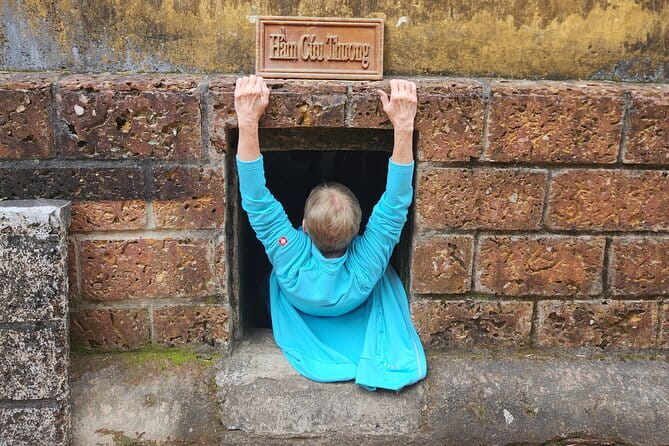
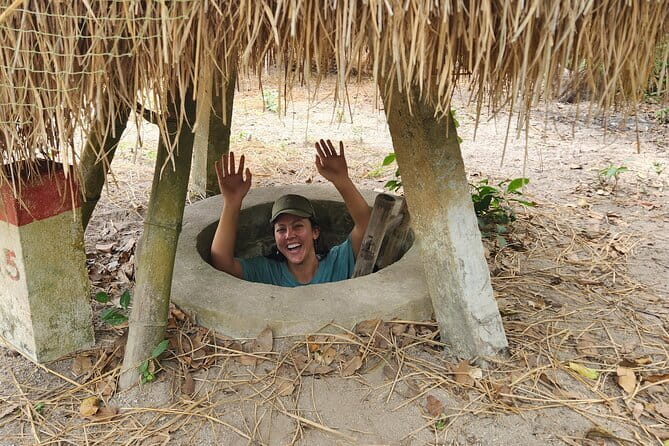
Ky Anh Tunnels take you far from Hoi An’s lantern streets and into a quiet farming area where wartime history lies under rice fields, homes, bamboo, and canals. The tunnels were built by hand from 1965 to 1967, and a veteran guide such as Mr. Thom, who helped construct them, can make the past feel startlingly close.
I like the direct human stories and the chance to see a less commercial site. I also like the pairing with Chien Dan Cham Towers, which adds a much older chapter of central Vietnam’s history. The main drawback is physical: the tunnels are dim, narrow, and may include shallow water, so this is not a good choice if confined spaces or uneven footing trouble you.
Key points at a glance
- A 32-kilometer underground network: Ky Anh’s tunnels once ran beneath villages, houses, straw piles, bamboo groves, and canals.
- A wartime story told by someone who lived it: Mr. Thom helped build the tunnels and may guide you through sections of the site.
- A quieter alternative to Cu Chi: This is presented as a less commercial, more rural experience.
- Two historical eras in one morning: The tour moves from the Vietnam War to the late-10th or early-11th-century Champa kingdom.
- A small-group format: The maximum group size is 15 people, with hotel pickup offered from Hoi An.
- A simple local lunch: A bowl of local noodles is scheduled before the return to your hotel.
Why Ky Anh Tunnels feel different from a standard war-history stop
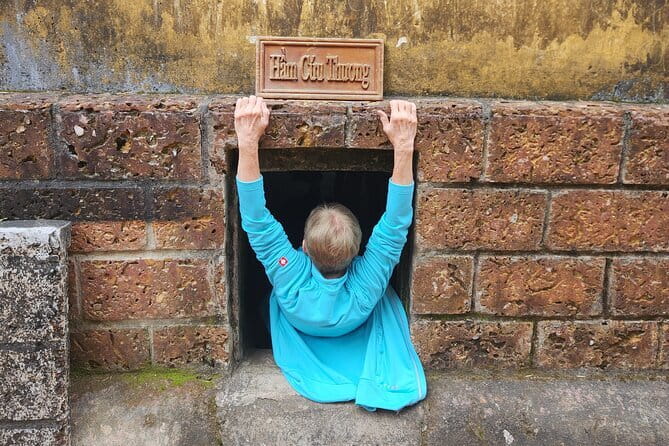
Many Vietnam War sites are arranged for quick visits, with clear paths, displays, and polished explanations. Ky Anh offers something less tidy. Its wartime network was cut into the earth with hammers and chisels, then extended beneath the ordinary fabric of village life.
The tunnels were created by the resistance side of northern Vietnam during the most intense years of the war. From 1965 to 1967, the system grew to roughly 32 kilometers. It passed under homes, straw piles, bamboo bushes, and canals, creating a concealed world beneath the countryside.
That setting matters. You are not looking at a battlefield separated from daily life. You are visiting a place where villages, farms, homes, and military activity were tied together. The peaceful surroundings make the story more affecting, not less. Green rice fields and quiet lanes offer little visual warning of what lies below.
The visit lasts about 1 hour and 30 minutes. Expect a guided walk through dim passages, with some shallow water pools and stories about warning systems used to detect danger. The exact amount of tunnel access can vary, but the attraction is the sense of scale and ingenuity, not a large museum collection.
More war history tours in Hoi An:
- WAR TOUR to MY LAI MASSACRE & KY ANH TUNNELS & GOLDEN PAGODA
★ 5.0 · 44 reviews - Ky Anh Tunnel & Cham Old Tower By Private Tour History of War
★ 5.0 · 19 reviews - Private Day Trip To Visit MY LAI MASSACRE from Hoi an or Da Nang City
★ 5.0 · 9 reviews
Meeting a veteran at the entrance to the past
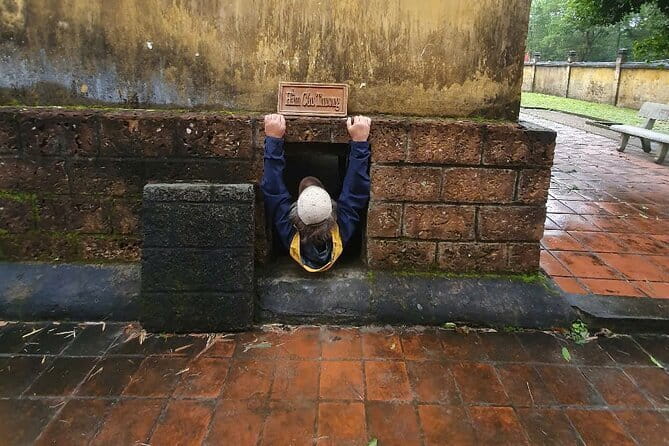
The strongest part of the experience is the possibility of hearing from a local veteran who helped build the tunnels. Mr. Thom is specifically associated with the site, and his role gives the visit a personal edge that a standard historical plaque cannot provide.
I would pay close attention to the practical details. How did people hide entrances? How were warnings passed through the village? How did the tunnel system connect homes, vegetation, and waterways? These details show the tunnels as a working system rather than a simple underground corridor.
The story is also about hardship. The provider’s own description places emphasis on the suffering Vietnamese people endured during the war. That means the visit is not presented as a military adventure or a chance to admire clever engineering alone. You should expect a serious account of survival, resistance, and loss.
The narrow passages are part of the point, but they also create a clear limitation. If you dislike dark, confined spaces, you may find this uncomfortable. Wear shoes that can handle damp ground, and avoid bringing anything you would worry about getting wet. The supplied information confirms shallow water pools, but it does not give exact tunnel dimensions or say how long you remain underground.
The 8:30 pickup from Hoi An
The day begins with hotel pickup at 8:30 a.m. in Hoi An. The drive to Ky Anh takes you into Quang Nam province, with the tunnel site described as about an hour from Hoi An. Exact driving time can depend on your pickup location and road conditions, so keep the morning flexible.
Pickup is a real advantage here. Ky Anh is an off-the-main-route site, and arranging transport yourself would add work to a half-day outing. The tour ends back at the original meeting point, making it easy to continue your Hoi An plans in the afternoon.
One past booking included a guide and an additional driver, which is useful because the guide can focus on explaining the site rather than navigating. You should not assume every booking will be private, though. The stated maximum is 15 people, so the group may be smaller or may include other participants.
The confirmation arrives when you book, and service animals are allowed. The tour is also listed as being near public transportation, although the included pickup is likely the simpler option for most people staying in Hoi An.
Inside the Ky Anh network
The tunnel stop begins at about 10:00 a.m. The visit is scheduled for 90 minutes, including the historical explanation and time inside the system.
Ky Anh was not a single bunker built for display. It was a network woven through the village area. The routes went under houses, straw stacks, bamboo, and canals, helping people move and hide without being easily detected by US forces.
That design makes the site especially valuable for anyone interested in how ordinary communities functioned during war. The underground passages were not isolated from village life. They were part of it.
The warning systems are another detail worth hearing carefully. The description refers to ingenious ways the village detected danger, though it does not spell out every method in advance. That is a good reason to let the guide lead rather than rushing through the site for photographs.
Photography may be possible, but the available information does not promise specific photo conditions or lighting. The passages are dim, and shallow water can make movement slower. Treat this as a listening and observation stop first, and a photo stop second.
The site is also less commercialized than Cu Chi. That comparison helps set expectations. You should not expect the same level of built-up visitor infrastructure or a long menu of staged activities. The appeal is the raw setting and the connection to the local village.
A completely different side of Hoi An:
- Hoi An: Basket Boat Ride in the Coconut Forest
★ 4.9 · 4,956 reviews - Hoi An: Vietnamese Coffee Culture and Coffee Making Class
★ 4.9 · 4,006 reviews - Hoi An: Vietnamese Foldable Lantern Making Class
★ 4.9 · 3,742 reviews - Cooking Class Hoi An:Local Market, Basket Boat, Fishing & Cooking
★ 5.0 · 3,660 reviews
A change of era at Chien Dan Cham Towers
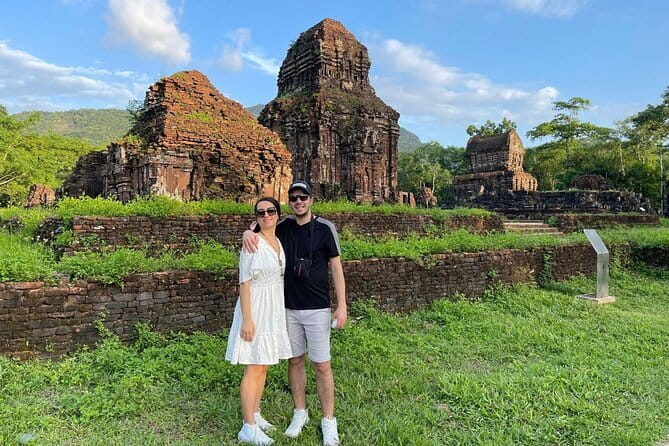
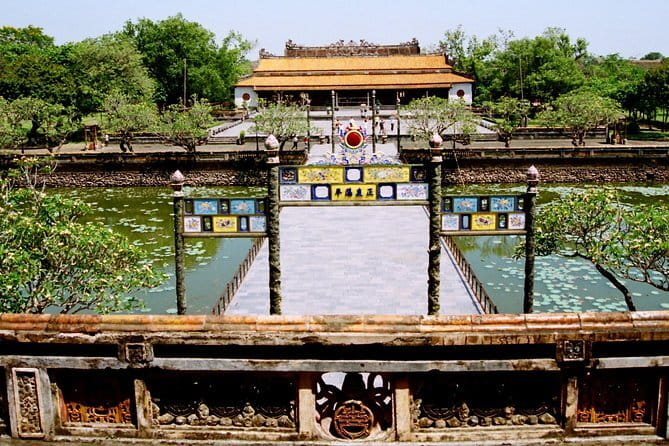
Around noon, the tour shifts from modern warfare to the Champa kingdom at Chien Dan Cham Towers. The towers date from the late 10th or early 11th centuries and form a group of three sanctuaries facing east.
This change of subject works well. After spending the morning below ground in a wartime setting, you return to the open air and look at religious architecture from many centuries earlier. It gives you a compact lesson in central Vietnam’s past without requiring a full second day.
The Chien Dan inscription is an important feature of the site. It is a large inscribed stone connected with the towers and provides evidence that they were built during the reign of King Harivarmadeva. It remains open to interpretation whether the king personally sponsored the monuments.
That small uncertainty is worth noting. History is not always a neat label attached to a building. In this case, the inscription helps establish a period and royal context, but does not settle every question about the towers’ construction.
The stop is scheduled for about one hour, with admission included. The information provided does not describe the condition of every tower, the interior access, or the amount of interpretation on site. Your guide’s explanation will therefore matter, especially if you want more than a quick look at the three structures.
Local noodles before the ride back
At about 12:30 p.m., you have local noodles before leaving for Hoi An. This is a modest but useful part of the day. A simple regional meal breaks up the sightseeing and means you do not need to arrange lunch immediately after the tower visit.
The description does not name the noodle dish or specify a restaurant, so you should not book this expecting a culinary tour. Think of it as a practical local meal included in the schedule.
The return to your hotel is planned for about 1:00 p.m., though the full outing is described as lasting roughly five to six hours. That range likely allows for driving and pickup time. It is wise not to schedule a fixed afternoon activity too tightly, especially if your hotel is outside central Hoi An.
Is $64 good value?

At $64 per person, this is not the cheapest half-day outing around Hoi An. The value depends on what you want from a short trip.
You are paying for hotel pickup, transport, a guide, access to two historical sites, and local noodles. The tunnel visit is the main reason to book. Since Ky Anh is not a standard stop on every Hoi An sightseeing route, the transport and local access have practical value.
The guide is also important. A basic transfer to the tunnel entrance would not offer the same context, particularly when a veteran such as Mr. Thom may explain how the network was made and used. The human account is what turns a dark passage into a meaningful historical visit.
The tour is a better deal for history-minded people than for anyone seeking scenery, shopping, or a relaxed countryside drive. You spend much of the morning in transit or at sites with a serious tone. The Champa towers add variety, but this remains a history-focused outing.
A perfect rating and full recommendation record from 16 submitted evaluations suggest the strongest points are the friendly organization, convenient pickup, personal guide, and veteran connection. I would give those features more weight than the modest lunch or the exact number of minutes at each stop.
Who should book this half-day trip?
I would choose this tour if you have a genuine interest in the Vietnam War and want a site that feels local rather than heavily packaged. It also suits anyone who prefers a guide-led visit, since the meaning of the tunnels is difficult to grasp from the passages alone.
The tour works well for people who want two distinct historical stops in one morning. The tunnels cover the 1960s resistance period, while Chien Dan introduces the Champa kingdom and its religious monuments.
It may not suit you if you want a leisurely outing with very little walking or if you have a strong dislike of dark, narrow spaces. The tour is also not ideal if your main goal is to spend time in Hoi An’s old town, since the morning is committed to the countryside.
Most people can participate, and the group maximum is 15. Still, the tunnel conditions deserve more attention than the general participation note. Ask yourself whether shallow water, dim passages, and uneven footing are acceptable before booking.
Practical details that affect your day

The start time is 8:30 a.m., and the tour returns to the meeting point in Hoi An. Pickup is offered, which removes one of the biggest transport problems with an out-of-town historical site.
The experience requires good weather. If poor weather causes cancellation, you are offered another date or a full refund. You can also cancel for a full refund up to 24 hours before the start time. Changes or cancellations made within 24 hours are not accepted for a refund.
The tour is run by Hoi An Cham Cham Travel. It is capped at 15 people, confirmation is provided at booking, and service animals are allowed.
I would wear practical footwear and clothing that you do not mind getting damp. The supplied information does not give a dress code or exact tunnel measurements, so prepare for a genuine site visit rather than a polished indoor attraction.
Should you book Ky Anh Tunnels and Chien Dan?
Book it if you want personal wartime history, a quieter rural setting, and a guide who can connect the tunnels to the lives of the people who built and used them. The addition of Chien Dan Cham Towers makes the half-day feel broader and more worthwhile than a single-site visit.
Skip it if you want a carefree morning, dislike enclosed spaces, or prefer Hoi An’s food and architecture to war history and ancient sanctuaries. For the right audience, $64 is fair because the transport, admissions, guide, veteran connection, and lunch are bundled into a compact outing. The main value is not comfort. It is access to a serious, unusual place with a story you cannot get from the old town alone.
FAQ
How long does the Ky Anh Tunnels and Chien Dan tour last?
The experience lasts approximately five to six hours. Pickup begins at 8:30 a.m., and the planned return to the hotel is around 1:00 p.m., though driving and pickup times can vary.
Is hotel pickup offered from Hoi An?
Yes. Hotel pickup is offered, and the tour begins in Hoi An, Quang Nam. The activity ends back at the meeting point.
How many people can join the tour?
The maximum group size is 15 people. A past booking was private and included a guide and an additional driver, but private arrangements are not guaranteed for every booking.
What will I see at Ky Anh Tunnels?
You will visit a wartime tunnel network built from 1965 to 1967. The system extends for approximately 32 kilometers beneath villages, homes, straw piles, bamboo bushes, and canals. The visit can include dim passages, shallow water pools, and explanations of local warning systems.
Are the Chien Dan Cham Towers included?
Yes. Admission to Chien Dan Cham Towers is included. The site contains three east-facing sanctuaries dating from the late 10th or early 11th centuries, along with the Chien Dan inscription.
What happens if bad weather cancels the tour?
If poor weather causes cancellation, you are offered a different date or a full refund. You may cancel for a full refund up to 24 hours before the experience starts.
Just added in Hoi An
- Hoi An: Ylang Ylang Spa Experience (Free pick up for 2pax++)★ 4.5 · 17 reviews
- Vietnamese Cooking Class with Local Family in Hoi An★ 4.9 · 20 reviews
- Hoi An Countryside Bicycle Tour : 25 Km Real Vietnam★ 5.0 · 12 reviews
- Vietnamese Coffee Making Class in Hoi An★ 5.0 · 4 reviews
- Vegetarian Cooking Class with Local Family in Hoi An★ 4.6 · 5 reviews
- Vegetarian Cooking Class W Optional Basket Boat from Hoi An★ 4.5 · 5 reviews
- My Son Sanctuary Private Tour – Early Morning or Half Day Tour★ 5.0 · 15 reviews
- Traditional Vietnamese Cooking Class in Leina Cookery★ 5.0 · 12 reviews
Hoi An War History Tours, compared.
WAR TOUR to MY LAI MASSACRE & KY ANH TUNNELS & GOLDEN PAGODA
Read our review →
Ky Anh Tunnel & Cham Old Tower By Private Tour History of War
Read our review →
Private Day Trip To Visit MY LAI MASSACRE from Hoi an or Da Nang City
Read our review →
Hoi An To Phong Nha Private Transfer Sightseeing – DMZ
Read our review →Browse the lists this tour appears in