
Reviewed · HOI AN BANH MI AND RICE PAPER CLASSES
Alluvia Hoi An Chocolate Making Class
Hoi An’s Alluvia class turns chocolate from a souvenir into something you understand and make yourself. In about two hours, you’ll follow cacao from pod to bar, temper dark chocolate, and leave with a 30-gram bar plus pralines and truffles.
I like the small maximum of six people, which gives the instructor room to explain techniques without making the session feel like a factory line. I also like the focus on Vietnamese cacao and local ingredients, rather than a generic candy-making lesson.
The main drawback is the short length. You’ll learn useful basics, but this is an introduction, not a full pastry course. The classroom is kept cool at about 16 to 20 degrees Celsius, so bring a light jacket or wear long sleeves.
Key Points
- From cacao pod to bar: Learn how cacao grows and how chocolate is produced in Vietnam.
- Hands-on tempering: Practice tempering dark chocolate, a key step for making chocolate glossy and firm.
- Several things to make: Prepare a 30-gram bar, pralines, and truffles during the class.
- Small class size: The experience accepts no more than six people, making it suitable for solo visitors, couples, and small groups.
- A useful take-home lesson: You receive practical tips for making chocolate at home, not just finished sweets.
- Simple value: The $21.76 price includes equipment, chocolate, other ingredients, water, and one free drink.
Starting at Alluvia Chocolate House at 2:00 pm
The class begins at Alluvia Chocolate House, at 36 Đ. Phan Chu Trinh in Hoi An’s Minh An area. You meet there at 2:00 pm, and the activity returns to the same place when it ends.
That central meeting point keeps the plan simple. You do not need to arrange a separate transfer, and the location is near public transportation. The ticket is mobile, so you can keep the booking on your phone rather than carrying a printed voucher.
The session lasts roughly two hours. That timing works well in Hoi An, especially if you want a break from walking, shopping, or sightseeing during the afternoon. I would allow a few extra minutes to arrive, find the chocolate house, and settle in before the lesson begins.
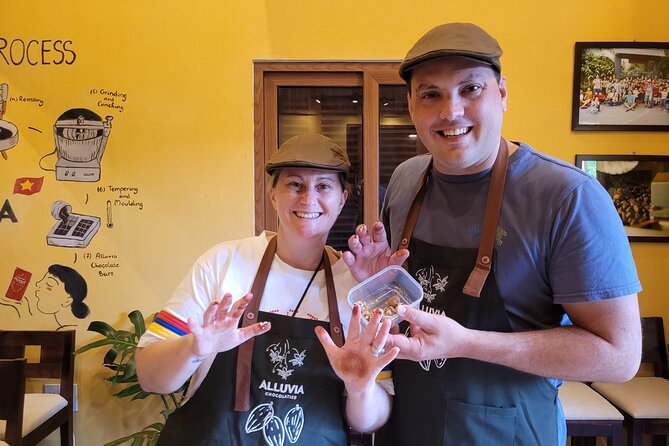
The group limit matters here. With no more than six people, you should have a fair chance to watch the demonstrations and work with the equipment. It also makes the class a practical choice for a couple or a small family group, rather than only for serious food enthusiasts.
More banh mi and rice paper classes in Hoi An:
- Hoi An: My Son Sanctuary & Sunset River Cruise BBQ or Banhmi
★ 4.7 · 345 reviews - MY SON Unesco Site & Fresh Rice Noodle “PHỞ” Making Experience
★ 5.0 · 220 reviews - Hoi An: My Son Early Morning with Banh My and Coffee 6 am
★ 4.7 · 205 reviews
Learning How Vietnam Turns Cacao Into Chocolate
The first part gives you the background needed to understand what follows. You’ll be introduced to the cacao tree, its characteristics, and cacao production in Vietnam.
This is one of the strongest parts of the experience because it connects your sweets to a local agricultural product. Vietnam is often associated with coffee, noodles, and street food, but cacao also has a place in the country’s food trade. The class gives you a look at how cacao moves from farm production toward finished chocolate.
You’ll also be introduced to the process from pod to bar. That phrase covers the basic path from cacao fruit to the chocolate you eat, and it helps explain why chocolate making involves more than melting a candy bar and pouring it into a mold.
The lesson is brief, but it gives useful context before you begin working. If you already know a great deal about cacao, you may find this part basic. If you are new to chocolate making, it gives you a clear foundation without turning the afternoon into a long lecture.
The class also explains how Vietnamese makers use local ingredients. That detail gives the activity a stronger Hoi An connection than a standard cooking lesson built around imported products.
Tempering Dark Chocolate by Hand
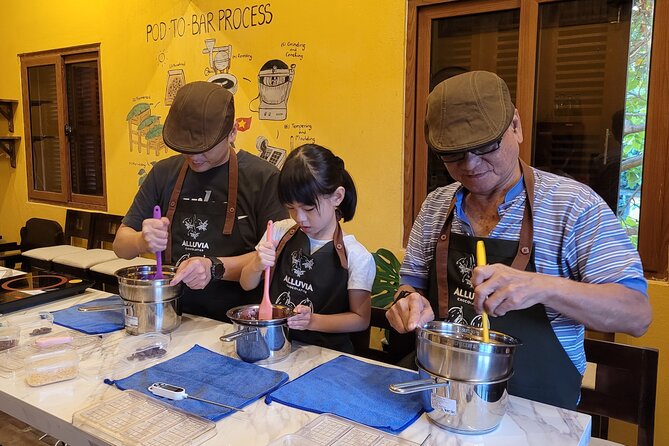
The technical center of the class is tempering dark chocolate. You’ll receive instruction on how to temper it, which is one of the most important basic skills in chocolate work.
Tempering controls the chocolate’s structure as it cools. Done properly, it helps produce a smoother finish and a firmer texture. The class does not promise professional-level mastery in one sitting, but it gives you a method you can try again at home.
You’ll work with dark chocolate as part of the premium course. If you prefer milk chocolate, there is a small extra charge. That is worth noting before you book, especially if milk chocolate is your first choice.
The tempering section is also where the small group helps most. You can watch the process closely and ask for help while handling the chocolate. With only two hours available, the instructor needs to keep things moving, but the limited group size should make the practical work easier to follow.
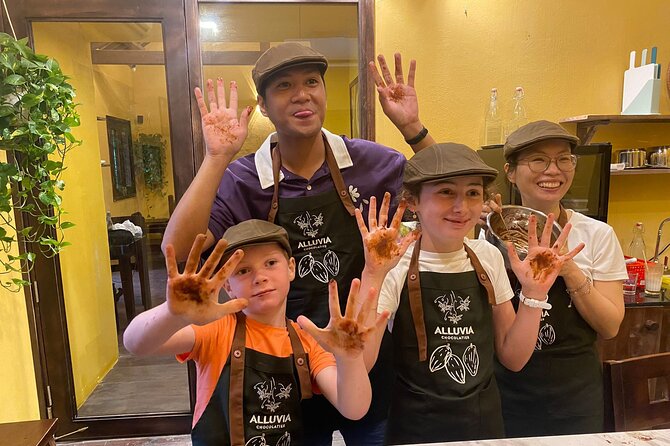
You should expect to get your hands involved rather than simply watch a demonstration. Wear something comfortable and keep in mind that chocolate work can be messy, even in a tidy classroom.
Making a 30-Gram Chocolate Bar
After learning the basic method, you’ll make a 30-gram chocolate bar. You’ll also learn how to wrap it with paper.
The bar is not huge, but it gives you a complete beginning-to-end task. You temper the chocolate, shape it, and finish it as a small item you can take with you. The paper wrapping adds a pleasant final step and makes the result feel more like a finished gift than a practice exercise.
You can choose ingredients for your bar from the options provided during the class. The available details do not specify every ingredient or flavor, so you should treat the selection as part of the in-class instruction rather than expect a fixed menu in advance.
This section is useful for anyone who wants to repeat the process at home. You learn not just how to eat chocolate, but how to handle it, shape it, and present it. The wrapping lesson is a small detail, yet it gives the activity a practical edge.
Do not expect to produce a large box of chocolate bars. The quantity is modest, and the point is learning several techniques in one short session.
A completely different side of Hoi An:
- Hoi An: Basket Boat Ride in the Coconut Forest
★ 4.9 · 4,956 reviews - Hoi An: Vietnamese Coffee Culture and Coffee Making Class
★ 4.9 · 4,006 reviews - Hoi An: Vietnamese Foldable Lantern Making Class
★ 4.9 · 3,742 reviews - Cooking Class Hoi An:Local Market, Basket Boat, Fishing & Cooking
★ 5.0 · 3,660 reviews
Pralines and Truffles Add Variety
The class moves beyond a single bar with hands-on praline and truffle making. These are different forms of chocolate confectionery, so you get a wider introduction to chocolate work than the price and duration might suggest.
Pralines and truffles also let you try other shapes and textures. The class includes the chocolate and other ingredients used for these sweets, along with the equipment needed to prepare them. You are not expected to bring tools or ingredients from outside.
This variety is a major reason I would choose the class over a simple chocolate-bar workshop. You get one structured bar-making task and then two other styles of confectionery. The lesson remains short, but the activities keep changing.
The trade-off is that none of these sections can be extremely long. You’ll receive instructions and tips for each item, but you should not expect the detailed production schedule of a professional chocolatier. Think of it as a well-packed introduction with several samples of the craft.
Tips You Can Use at Home
The instructor provides tips related to making chocolate, including techniques that can be applied at home. This gives the class value beyond the sweets you make that afternoon.
Home chocolate making can be awkward if you do not understand how chocolate reacts to heat, cooling, and handling. A few clear instructions can prevent common mistakes. The class gives you a starting point for repeating the work in your own kitchen.
I would pay close attention during demonstrations and note the details that seem easy to forget. The most useful part of a short course is often the small correction from the instructor while you are working, not the broad explanation at the start.
The lesson is described as brief but informative and full of tips. That balance suits beginners. You get enough explanation to understand the process, then enough practice to see how the technique works.
If you are already experienced with tempering, pralines, and truffles, you may want a longer or more technical course. For a first introduction, the practical advice should be more useful than a long history of chocolate.
What the $21.76 Price Covers
At $21.76 per person, the class offers solid value if you want an activity rather than a tasting stop. The price includes the equipment used for the bar, pralines, and truffles, plus the chocolate and other ingredients needed during the session.
You also receive one free drink from the menu. You can choose one coffee or tea, and water is available for refill. That is a modest inclusion, but it makes the afternoon feel self-contained.
Lunch is not included, and the class does not include extra desserts, meals, or additional drinks beyond the one offered. You should eat separately and treat the chocolate you make as the main food-related part of the experience.
The value is strongest for people who appreciate instruction and hands-on work. If you only want to buy Vietnamese chocolate, a shop visit may cost less and take less time. If you want to understand the product and make several items yourself, the equipment, ingredients, guidance, and small class size make the fee reasonable.
A current rating of 4.7 from 12 ratings, with 92 percent recommending the activity, points to a well-received experience. The sample feedback especially praises the small class, the amount of chocolate you take away, and the chance to learn about Vietnam’s chocolate farms and trade.
Staying Comfortable in the Cool Classroom
Hoi An can be hot, but the classroom is kept at about 16 to 20 degrees Celsius. That is cool enough to help with chocolate handling, yet noticeably colder than the streets outside.
Bring a light jacket or wear a long-sleeved shirt. This is easy to overlook when packing for a warm-weather afternoon, and you may be sitting or working in the cool room for most of the two-hour session.
The cooler temperature has a practical purpose. Chocolate needs careful handling, and a room that is too warm would make the work harder. You are trading tropical comfort for better working conditions.
The activity requires good weather, and poor weather can lead to a new date or a full refund. The minimum number of participants also needs to be met. If that minimum is not reached, you can be offered another date or experience, or receive a full refund.
Who Will Enjoy This Two-Hour Class
I would recommend this activity to anyone who likes food with a local connection and wants more than a quick tasting. It suits solo visitors because the small group gives you a built-in activity without requiring a large party.
Couples can make it a relaxed afternoon outing, and small groups can compare bars, pralines, and truffles while learning the same methods. The class also works well for people who want an indoor break during a hot day in Hoi An.
Families may enjoy the hands-on format, though the available details do not specify age requirements. If you are booking for children, check the current booking information before paying.
This is less suitable if you want a full meal, a long cultural tour, or advanced professional instruction. It is also not the right pick if you dislike dark chocolate and do not want to pay the small extra charge for milk chocolate.
The strongest match is a curious beginner who wants to learn how Vietnamese cacao becomes chocolate, make several sweets, and leave with practical ideas for home use.
Booking and Cancellation Details
You can cancel for a full refund if you do so at least 24 hours before the 2:00 pm start time. Cancellations made within 24 hours are not refunded, and changes made during that period are not accepted.
The cut-off follows local Hoi An time. Confirmation is provided when you book, and the experience uses a mobile ticket.
Because the activity depends on good weather and a minimum number of participants, the provider may offer a different date or experience if the session is canceled. You can also receive a full refund in those cases.
Should You Book Alluvia’s Chocolate Class?
Book it if you want a short, hands-on Hoi An activity with a clear local angle. For $21.76, you learn about Vietnamese cacao, practice tempering, make a bar, prepare pralines and truffles, and receive a drink, ingredients, equipment, and home-making tips.
Skip it if you want a large quantity of chocolate, a complete meal, or advanced training. The class is brief, the basic course centers on dark chocolate, and the cool room may require a jacket.
For most first-time chocolate makers, I think the small class and range of activities make this a smart afternoon choice. You get something to eat, something to learn, and a practical souvenir you helped make yourself.
FAQ
Where does the chocolate-making class begin?
It begins at Alluvia Chocolate House Hội An, located at 36 Đ. Phan Chu Trinh, Minh An Ward, Hoi An, Quang Nam, Vietnam.
What time does the class start?
The class starts at 2:00 pm.
How long does the experience last?
The activity lasts approximately two hours.
Where does the activity end?
It ends back at the Alluvia Chocolate House meeting point.
How many people can join the class?
The activity has a maximum of six participants.
What chocolate will I learn to temper?
The course includes instruction on tempering dark chocolate. Milk chocolate is available for a small extra charge.
What will I make during the class?
You’ll make a 30-gram chocolate bar, prepare chocolate pralines and truffles, and learn how to wrap the bar with paper.
Is a drink included?
Yes. You can choose one free coffee or tea from the menu, and water is available for refill.
Can I cancel for a full refund?
Yes, if you cancel at least 24 hours before the experience start time. Cancellations within 24 hours are not refunded.
More Hands-on Workshops in Hoi An
- Hoi An Cooking Class(Market,BasketBoat Crabfishing&Cooking Class)
★ 5.0 · 3,386 reviews - From Hoi An: Market Tour, Basket Boat Ride and Cooking Class
★ 4.8 · 2,208 reviews - Hoi An Full Lantern Making Class- A special Foldable lantern
★ 5.0 · 2,007 reviews - Hoi An Cooking Class(Local market,Basket Boat,Fishing & Cooking)
★ 5.0 · 1,323 reviews
Just added in Hoi An
- Hoi An: Ylang Ylang Spa Experience (Free pick up for 2pax++)★ 4.5 · 17 reviews
- Vietnamese Cooking Class with Local Family in Hoi An★ 4.9 · 20 reviews
- Vietnamese Coffee Making Class in Hoi An★ 5.0 · 4 reviews
- Hoi An Countryside Bicycle Tour : 25 Km Real Vietnam★ 5.0 · 12 reviews
- Vegetarian Cooking Class with Local Family in Hoi An★ 4.6 · 5 reviews
- Vegetarian Cooking Class W Optional Basket Boat from Hoi An★ 4.5 · 5 reviews
- My Son Sanctuary Private Tour – Early Morning or Half Day Tour★ 5.0 · 15 reviews
- Traditional Vietnamese Cooking Class in Leina Cookery★ 5.0 · 12 reviews
Hoi An Banh Mi and Rice Paper Classes, compared.

My Son Sanctuary & Sunset River Cruise BBQ or Banhmi
Read our review →
MY SON Unesco Site & Fresh Rice Noodle “PHỞ” Making Experience
Read our review →
My Son Early Morning with Banh My and Coffee 6 am
Read our review →
My Son Sanctuary Early Morning Tour 6 am w Banh my and Coffee
Read our review →

My Son Sunset Trip with Banh Mi and Cruise from Hoi An/ Da Nang
Read our review →
My Son Sanctuary Morning/Afternoon with Boat Trip and Banhmi
Read our review →
MY SON SANCTUARY – RICE PAPER MAKING DELUXE TOUR FROM DANANG
Read our review →Browse the lists this tour appears in