
Reviewed · HOI AN CYCLING TOURS
Biking to Explore Traditional Craft Villages in Hoi An.
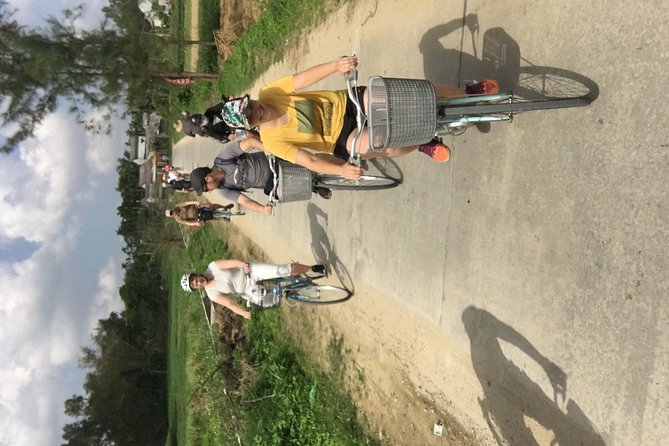
Hoi An’s countryside becomes far more interesting when you are moving through it by bicycle. This five-hour outing links working craft villages with rice fields, family workshops, a pagoda, a war monument, and a boat ride back to the old town. You do not simply look at finished souvenirs. You get your hands on clay, rice flour, and reeds.
I like the hands-on village work, especially the chance to make a cup or bowl in Thanh Ha and try a sleeping mat. I also like the easy pace, which leaves room for photos, questions, and short conversations with local families. The main thing to consider is that you will cycle about 15 kilometers, so this is not the right choice if you want a vehicle-based sightseeing tour.
Key points to know before booking
- Make pottery in Thanh Ha: Shape clay into cups, jars, bowls, or pots and keep your piece as a souvenir.
- See work done at home: Rice paper, rice noodles, and sleeping mats are made in local family workshops.
- Ride beyond the old town: The route passes rice fields, corn, chili gardens, a pagoda, a cemetery, and a war monument.
- Hear local history: Your English-speaking guide explains the Vietnam War and the places along the route.
- Finish by boat: After Kim Bong carpentry village, you return toward Hoi An by boat rather than cycling the same way back.
- Small group format: The maximum group size is 10, with bikes, bottled water, entry tickets, and boat transport included.
Why this bicycle route shows you more of Hoi An
Many Hoi An excursions stay close to the yellow-walled old town. This one takes you into the working countryside, where craft is part of daily life rather than a display arranged only for sightseeing. You pedal past farms and homes, then stop to see how useful objects are made by hand.
The pace is described as easy and leisurely. That matters here. You are not racing from one attraction to another. The route covers about 15 kilometers, but it is broken into short visits and practical demonstrations. You should still be comfortable riding a bicycle for several hours, yet you do not need a serious cycling background.
A guide gives the ride its shape. Guide Hung is specifically associated with this experience, and the tour provides an English-speaking guide. A good guide is especially useful on the less obvious parts of the route, such as the war monument, cemetery, and farming areas. You get context instead of just a series of stops.
Pickup is scheduled for 8am, with the tour ending around 1:30pm. An early start is useful in Hoi An, since the morning hours are usually the most comfortable time for cycling. The price is $45, which is fair if you value the included bike, boat, admissions, bottled water, guide, and several hands-on activities. It is less appealing if you only want to see villages from a vehicle or are unlikely to take part in the craft work.
More craft village workshops in Hoi An:
- Hoi An: Thanh Ha Village Tour with Pottery Making and Gift
★ 4.8 · 78 reviews - Hoi An: Handmade Leather Crafts Workshop (Starter Course)
★ 4.9 · 71 reviews - Cocopalm Forest To A Craft Village
★ 5.0 · 31 reviews
8am pickup and the ride out of Hoi An
The experience begins with pickup at your hotel. From there, you set out by bicycle toward the villages around Hoi An. The route is designed to show how quickly the town gives way to fields, gardens, family homes, and small workshops.
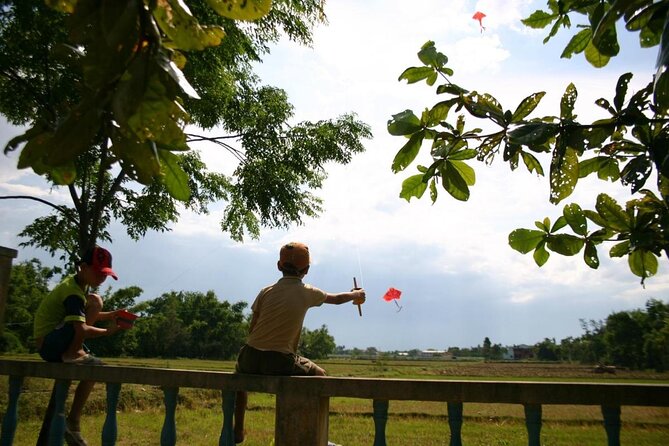
The cycling itself is one of the strongest parts of the morning. You see more at bicycle speed. A short glance at a garden becomes a chance to stop for a photograph. A field is not just scenery behind a car window. You pass through the area where people grow rice, corn, and chilies, and you may have the chance to photograph water buffalo.
Do not expect a hard workout or a long-distance cycling challenge. The ride is presented as easy, but 15 kilometers still takes energy, especially in warm weather. Wear practical clothes, bring sun protection, and choose footwear that works both on a bicycle and in a workshop.
The small maximum of 10 people is another advantage. A large group would make the family visits awkward and slow down the ride. With fewer people, you have a better chance to hear the guide and take a turn at each activity.
Thanh Ha Pottery Village and the pleasure of making something
The first major stop is Thanh Ha Traditional Pottery Village. The village is known for families who make bricks and roof tiles used in buildings, including old houses. This gives the visit a useful connection to Hoi An’s architecture. You are not looking at pottery in isolation. You are seeing one part of the work that helps shape the town itself.
You can try making cups, jars, bowls, and pots. The important point is that you get to do the work yourself. Your finished item can be kept as a souvenir, giving the stop more meaning than simply buying a ready-made object.
This activity should suit anyone who likes learning by doing. Children and adults can both find it enjoyable, though the final shape may not look perfect. That is part of the charm. Clay responds to your hands, and a wobbly bowl is a more personal reminder of Hoi An than another mass-produced item.
The stop may also help you understand why traditional craft villages still matter. A craft is not only an art form. It can provide work for local families and preserve skills tied to the area. Your guide can connect what you are making with the way the village has served local building and household needs.
Allow yourself to get a little messy. The activity is more rewarding when you treat it as a short lesson rather than a polished pottery class. The tour includes visit tickets, so you do not need to arrange separate admission for this stop.
Rice paper and noodles made from rice flour
The next visit takes you to a local family that makes rice paper and noodles from rice flour. This is a quieter, more domestic kind of craft than pottery, but it may be just as revealing. Rice is central to Vietnamese food, and here you see how a basic ingredient becomes something used at the table.
You can try making the rice paper and noodles yourself, then eat the result. That combination makes the stop practical and enjoyable. You see the process, take part, and then understand the food through taste rather than explanation alone.
The visit also gives you a look at work carried out in a family setting. Instead of stopping at a formal museum or a large production site, you see a household skill being used and passed along. The experience is at its best when you ask questions and pay attention to the small steps involved.
There is no claim that you will become an expert noodle maker in one visit. The value is in seeing the labor behind foods that can seem simple when served in a bowl. You may leave with a new appreciation for how much effort goes into everyday cooking.
More cycling tours in Hoi An:
- Hoi An Countryside Bike Cycling Tour with Basket Boat and lunch
★ 5.0 · 325 reviews - Hoi An: Morning Countryside Tour by Bike
★ 4.8 · 303 reviews - Hoi An Morning Countryside Tour by Bike
★ 5.0 · 282 reviews - Hoi An countryside cycling tour
★ 5.0 · 227 reviews
Reed sleeping mats and another chance to try
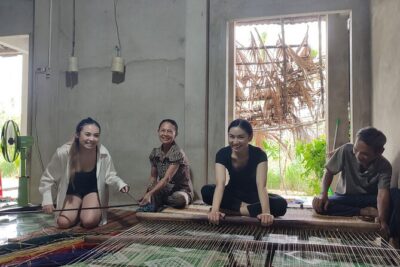
The mat-making stop visits a family that specializes in sleeping mats made from reeds. You can challenge yourself by making part of one yourself. This is a good contrast with the earlier craft activities. Pottery uses clay, noodles use rice flour, and mat-making depends on plant material and careful handwork.
The activity may look simple until you try to keep the reeds aligned. That is precisely why it belongs on the tour. You get a brief sense of the patience and skill required for an object that is practical rather than decorative.
The description refers to sleeping mats, not simply woven souvenirs. That distinction matters. You are seeing how local materials become household goods. The craft has a direct link to daily life, which makes the stop more useful than a quick look at a shop shelf.
As with pottery, the result may be uneven. Do not measure the stop by the quality of what you make. Measure it by the chance to understand the work and meet the people who continue to do it.
Pagoda, cemetery, and stories from the war
The route then crosses another river and moves into a more reflective part of the morning. You stop to see a pagoda, a war monument, and a cemetery. Your guide shares stories about the Vietnam War and the places along the route.
This section gives the ride historical weight. Hoi An is often presented through its old houses, lanterns, and riverfront. Those are important, but they are not the whole story. Rural areas also carry memories of conflict, loss, religion, and family life.
A cemetery can be a quiet place, and visitors should behave respectfully. This is not a photo stop in the same sense as a rice field or garden. Listen to the guide, keep your voice low, and treat the site as a place of remembrance.
The war stories are a useful reason to choose a guided ride rather than cycling independently. You could follow roads through the countryside on your own, but you would likely miss the meaning of the monument and cemetery. The guide helps turn ordinary-looking places into part of the region’s past.
Farms, water buffalo, and the rural side of Hoi An
Between the craft stops, you ride through chili gardens, corn farms, and rice fields. This is where the tour feels least like a standard sightseeing route. The countryside is not being presented as a single attraction. You are moving through several kinds of work that support local life.
You may have a chance to photograph water buffalo. Keep your expectations sensible. The animal encounter is a possibility along the route, not a guaranteed staged activity. The appeal is seeing buffalo in the setting where they belong, near fields and farm work.
The farm sections also give you breathing room after the workshops. You can ride, look around, and let the morning unfold at a slower pace. If you enjoy photography, this is one of the best reasons to carry a phone or camera. The route includes a mix of close-up craft details and wider views of fields and waterways.
The countryside can also expose the limits of a fixed schedule. Some stops may take longer when you are trying the activity yourself, while cycling conditions and weather can affect the timing. The tour is planned to finish around 1:30pm, but you should allow the morning to run at a relaxed pace rather than expecting military precision.
Kim Bong carpentry and the final boat ride
The last major village stop is the traditional carpentry area. Here you see local craftspeople carving wooden statues and making fishing boats. This is a strong finish because the work is larger in scale and more visibly demanding than the earlier activities.
The boatbuilding element connects the village to Hoi An’s waterways and fishing life. The wooden statues show another side of the craft, with carving skill applied to detailed forms rather than practical transport. Together, the two examples show how wood can serve both everyday needs and artistic expression.
You should expect to watch the carpenters rather than build a boat yourself. The hands-on parts of the tour focus on pottery, rice paper and noodles, and reed mats. At Kim Bong, the value comes from seeing the skill, tools, and finished work.
After the carpentry visit, you board a boat back toward Hoi An’s old town. This is more than a convenient return. It changes your view of the area after several hours on land and gives the morning a pleasant final movement along the water. Bikes and boat transport are included, so you do not need to arrange your own way back.
What the $45 price really covers
At $45, this is not the cheapest way to see Hoi An’s countryside, but the price includes several separate elements: hotel pickup, an English-speaking guide, bicycles, boat transport, entry tickets, and bottled mineral water. The craft activities also give you something to do rather than only something to photograph.
I see the best value in the combination of transport and access. Hiring a bicycle alone would not provide the introductions to family workshops or explanations at the war monument and cemetery. A private taxi would cost more and would remove much of the point of the trip.
The price makes less sense if you dislike cycling, have no interest in trying traditional crafts, or want a short morning with only major sights. It is also worth remembering that personal expenses and tips are not included.
Confirmation is provided when you book, and the group is limited to 10 people. Most people can take part, according to the tour information, but you should be prepared for several hours of cycling and workshop activity. The experience depends on good weather. If poor weather causes cancellation, you are offered another date or a full refund.
Free cancellation is available up to 24 hours before the start time. Cancel less than 24 hours ahead, and the amount paid is not refunded. Changes inside that period are not accepted.
Who should book this Hoi An cycling experience?
I would choose this tour if you want to understand Hoi An through the work people do, not only through its historic center. It suits you if you enjoy small-group activities, gentle cycling, local food preparation, and the chance to speak with families in their own working spaces.
It is also a good choice for an early morning during a longer Hoi An stay. The route gives you a different side of the area without taking a full day, and the boat return means you are back in town in time for the afternoon.
I would think twice if you want a fully passive excursion, dislike heat, or are not comfortable cycling about 15 kilometers. The route is described as easy, but easy is not the same as effortless. You will be on a bike, getting on and off, and taking part with your hands.
For me, the strongest features are the leisurely pace and the range of activities. You shape clay, work with rice flour, try weaving reeds, hear war stories, see farm life, and watch carpenters at work. That is a lot of variety in five hours, without turning the morning into a rushed checklist.
FAQ
What time does the tour begin and finish?
Hotel pickup is scheduled for 8am, and the tour finishes around 1:30pm.
How far do I cycle?
The cycling distance is about 15 kilometers. The pace is described as easy and leisurely.
What is included in the $45 price?
The price includes visit tickets, an English-speaking guide, bicycles, bottled mineral water, and the boat ride back to Hoi An.
Can I make pottery during the tour?
Yes. At Thanh Ha Traditional Pottery Village, you can try making cups, jars, bowls, and pots, then keep your piece as a souvenir.
Is the boat ride included?
Yes. After visiting the carpentry village, you take a boat back toward Hoi An’s old town.
What happens if bad weather cancels the tour?
You can choose a different date or receive a full refund if poor weather causes the experience to be canceled. You can also cancel for a full refund up to 24 hours before the start time.
Just added in Hoi An
- Vietnamese Cooking Class with Local Family in Hoi An★ 4.9 · 20 reviews
- Hoi An: Ylang Ylang Spa Experience (Free pick up for 2pax++)★ 4.5 · 17 reviews
- Hoi An Countryside Bicycle Tour : 25 Km Real Vietnam★ 5.0 · 12 reviews
- Vietnamese Coffee Making Class in Hoi An★ 5.0 · 4 reviews
- Vegetarian Cooking Class with Local Family in Hoi An★ 4.6 · 5 reviews
- Vegetarian Cooking Class W Optional Basket Boat from Hoi An★ 4.5 · 5 reviews
- My Son Sanctuary Private Tour – Early Morning or Half Day Tour★ 5.0 · 15 reviews
- Traditional Vietnamese Cooking Class in Leina Cookery★ 5.0 · 12 reviews
Hoi An Cycling Tours, compared.

Hoi An Countryside Bike Cycling Tour with Basket Boat and lunch
Read our review →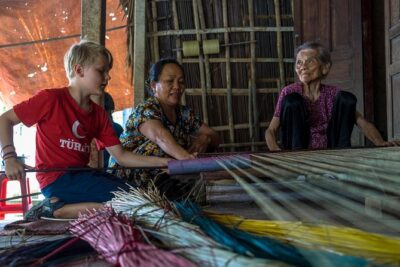
Countryside Bicycle To-Trà Quế village,Carpentryvillage,makingMat
Read our review →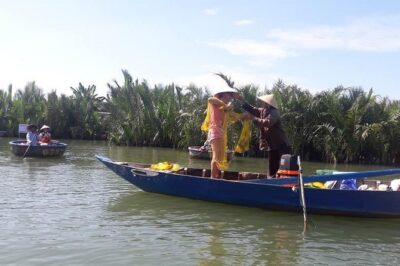
Hoi An Countryside Biking Tour(Vegetable village -basket boat – fishing village)
Read our review →

Rural Cycling Tour to Village with Basket Boat Ride
Read our review →Browse the lists this tour appears in