
Reviewed · HOI AN ANCIENT TOWN WALKING TOURS
Hoi An: Traditional Vietnamese Calligraphy Class in Oldtown
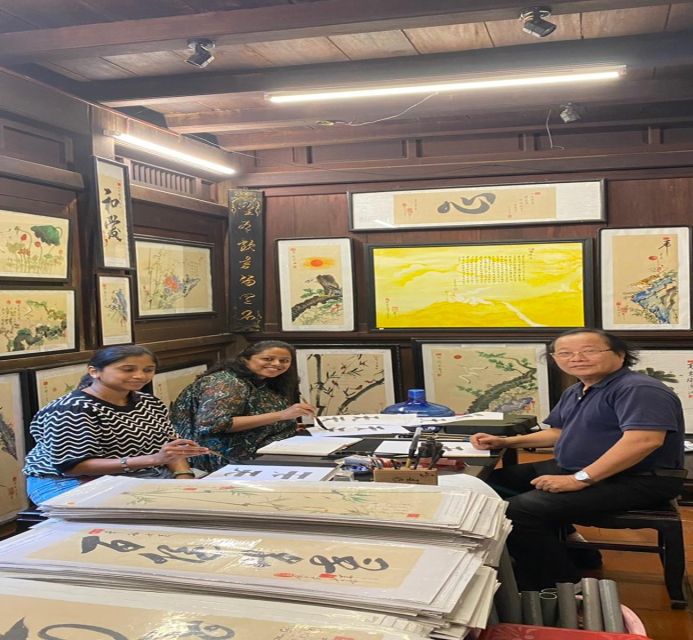
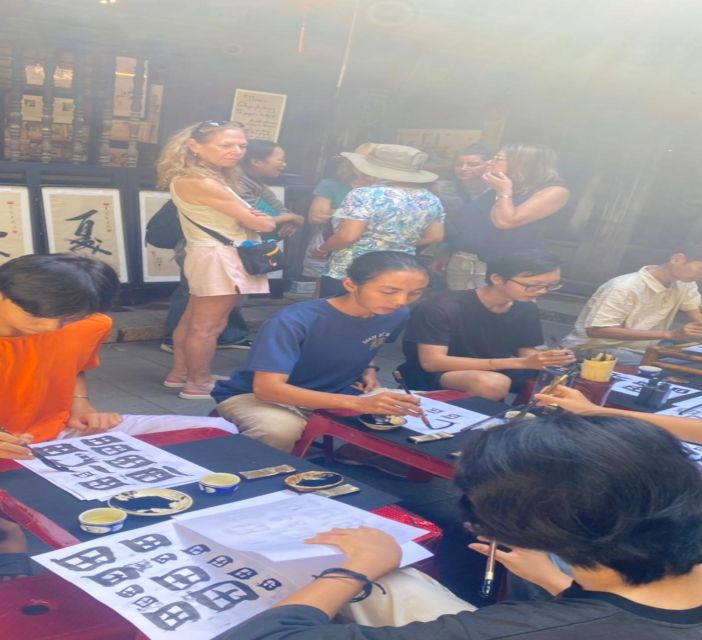
Vietnamese calligraphy makes a welcome escape from Hoi An’s busy streets. In a small group of no more than eight, you learn how written characters were formed, what the tools meant, and how to create your own artwork with a fur pen, Chinese ink, and traditional Do rice paper.
I like two things here: the class gives you real cultural context instead of only a quick souvenir-making session, and you leave with both your own practice work and a personalized piece made by the calligrapher. The teacher is described as patient, funny, and fluent in English, which matters when the lesson depends on small movements and careful explanation.
The main drawback is the $296 per-person price for two hours. That is a serious cost for a short art class, so I would book only if a personal cultural lesson and a handmade keepsake are worth more to you than a longer sightseeing activity.
Key points about the Hoi An calligraphy class
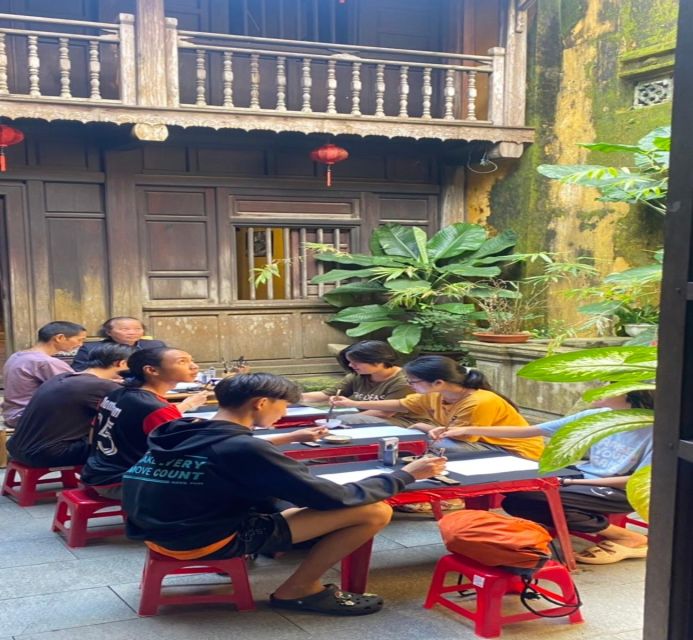
- Small groups of up to eight: You get a more personal lesson than in a large workshop.
- Traditional materials: Practice with a fur pen, Chinese ink, and Do rice paper.
- Ancient and modern writing: The class introduces both older Vietnamese calligraphy and current forms.
- More than calligraphy: You may also learn traditional folk painting and watercolor scenes.
- Personal gift included: The calligrapher creates a rice-paper work with your name or your idea.
- Simple central meeting point: Begin and end at the Museum of Folk at 33 Nguyen Thai Hoc Street.
Meeting the calligrapher at 33 Nguyen Thai Hoc Street
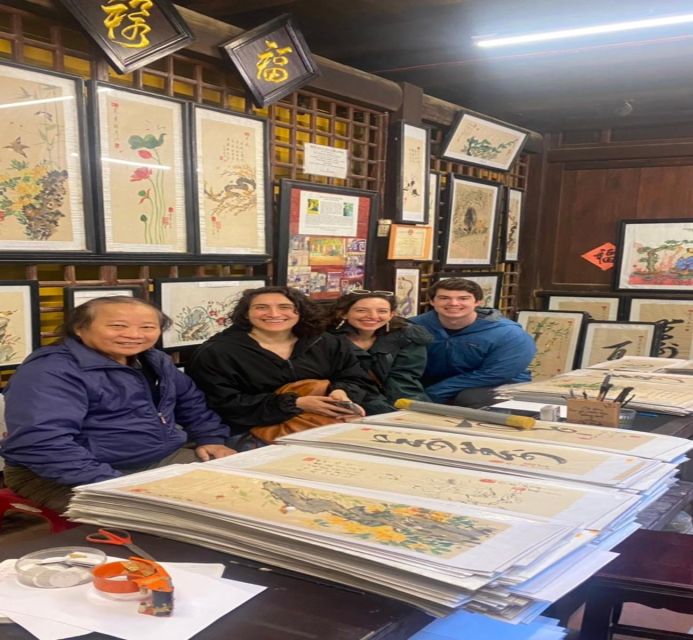
The experience begins at the Museum of Folk at 33 Nguyen Thai Hoc Street in Hoi An Old Town. You arrange your own way there because hotel pickup and drop-off are not included. The activity returns to the same meeting point after two hours.
That fixed start and finish makes planning easy. You can pair the class with time in the Old Town before or after it, but allow enough time to find the museum and arrive ready to begin. The class is not a moving tour, so there is no transport to organize once you arrive.
The group limit is eight people. That is small enough for the calligrapher to watch how you hold the pen and correct your technique. It also suits families and friends who want to make something together without being separated into a large crowd.
The information does not provide a specific teacher’s name, so you should not book expecting a named artist. What is clear is the role: an English-speaking local calligrapher leads the lesson and explains the cultural background as you work.
More Ancient Town walks in Hoi An:
- Hoi An Ancient Town Walking Tour with a Local
★ 5.0 · 517 reviews - The Lantern Lady: Traditional Lantern Class in Old Town
★ 4.9 · 444 reviews - Hoi An Ancient Town – Walking Tour with Local Guide
★ 4.9 · 385 reviews
Understanding Vietnamese calligraphy before picking up the pen
The first part of the class focuses on the story behind Vietnamese calligraphy. You learn about ancient and modern forms, the way characters were designed, and the tools once used to communicate through writing.
This context gives the activity more weight. You are not simply copying attractive symbols onto paper. You begin to see calligraphy as a form of communication shaped by language, tradition, and the hand of the writer.
One particularly useful part is learning how to read some characters and how their shapes developed. That helps you understand why each stroke matters. A line is not just decoration. Its direction, pressure, and placement affect the whole character.
I like this approach because it gives beginners a reason to slow down. You do not need prior drawing or writing experience. The point is to notice form and movement, then practice it patiently.
The class also offers a look at the tools themselves. A fur pen feels very different from an ordinary marker or ballpoint pen. Chinese ink and handmade Do rice paper are part of the lesson, not just attractive props for photographs.
Practicing with a fur pen, ink, and Do rice paper
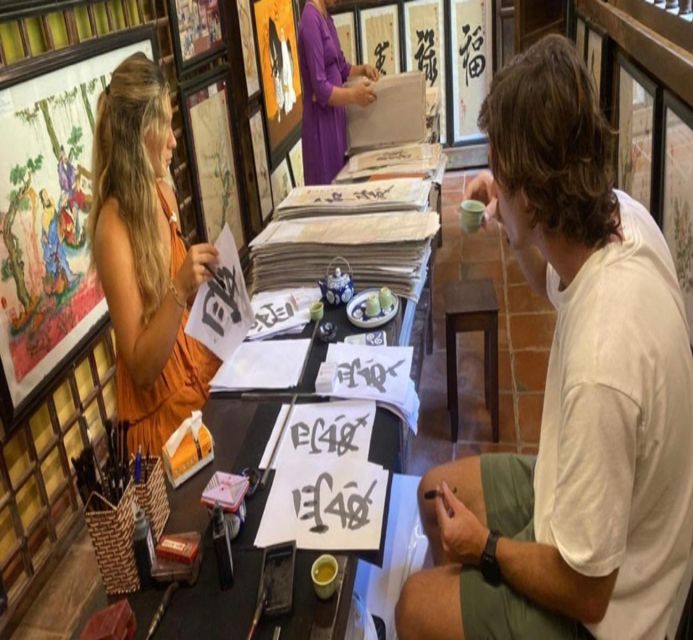
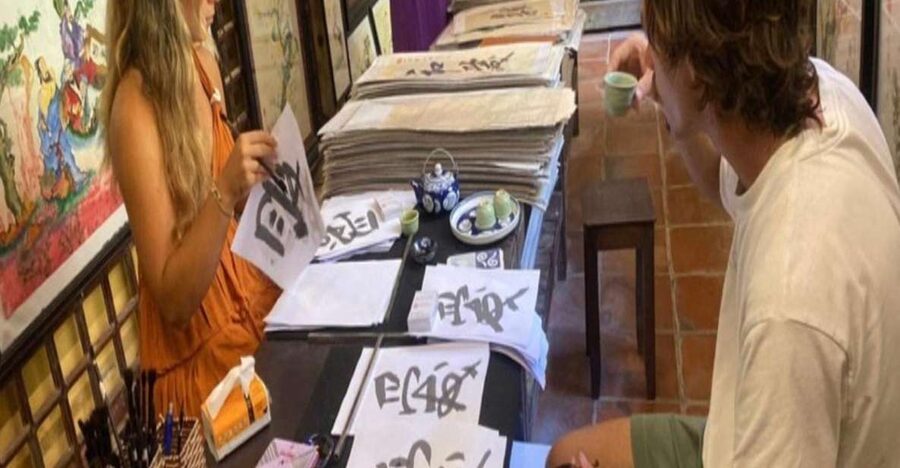
After the introduction, you create your own calligraphy artwork. The calligrapher helps you use the fur pen, Chinese ink, and traditional Do rice paper.
For you, the practical challenge is control. The paper and ink make each stroke visible, so rushing will not help. You have to pay attention to the angle of the pen and the amount of ink. That is part of the appeal, but it can also feel demanding if you expect an instant perfect result.
This is a useful activity for families because the finished work does not need to look identical from one person to the next. Each participant can make a personal attempt. Friends can compare their results, and children can take part in a creative task rather than simply watching a demonstration.
The group size helps here. With no more than eight participants, the English-speaking teacher can give individual guidance. The available information does not promise a private class, but the limit keeps it from becoming an impersonal demonstration.
You should handle the paper with care and follow the teacher’s instructions closely. Traditional materials are central to the class, and they are also part of what makes the finished work worth keeping.
Adding folk painting and watercolor to the lesson
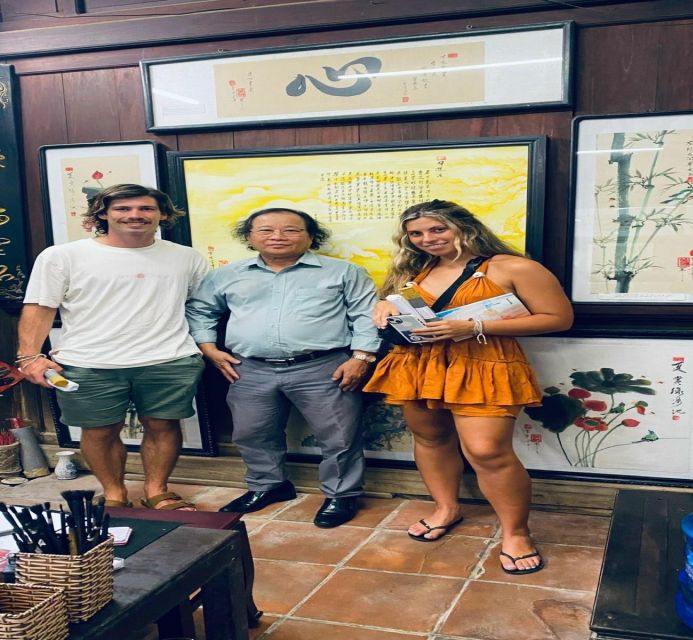
This experience is not limited to writing. You also learn how to draw traditional folk paintings and watercolor scenes.
The painting section adds variety to the two-hour session. If repeated calligraphy strokes begin to feel difficult, changing to color and image gives you another way to work creatively. It also makes the class appealing to people who are curious about Vietnamese art but are not sure calligraphy alone will hold their attention.
The available details do not specify exactly which folk designs or scenes you will paint. You should think of this as an introduction rather than a full painting course. The focus remains on traditional Vietnamese calligraphy, with painting as an additional art activity.
I like the mix because it gives you more than one finished result to remember the class by. Still, the short duration means the teacher must divide the time between explanation, writing, and painting. If your main goal is serious calligraphy practice, you may prefer to spend most of the session on the writing portion.
More craft village workshops in Hoi An:
- Hoi An: Thanh Ha Village Tour with Pottery Making and Gift
★ 4.8 · 78 reviews - Hoi An: Handmade Leather Crafts Workshop (Starter Course)
★ 4.9 · 71 reviews - Cocopalm Forest To A Craft Village
★ 5.0 · 31 reviews - Hoi An Countryside Tour:CamKim Island, Craft Villages&Basket Boat
★ 5.0 · 26 reviews
Tea, conversation, and a slower side of Hoi An
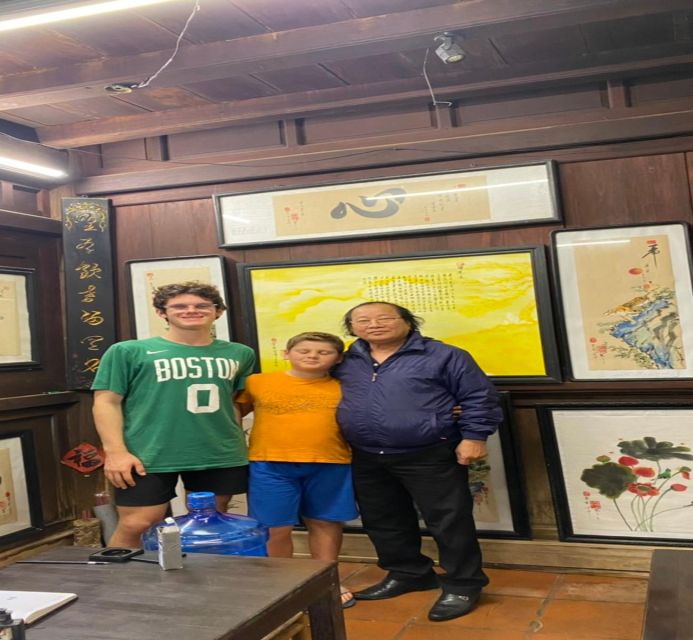
Traditional Vietnamese tea is included. It is a small detail, but it fits the pace of the lesson. The tea gives you a quiet pause between explanation and practice, rather than turning the class into a rushed sequence of instructions.
Food and other drinks are not included, so do not treat this as a meal or tasting experience. The tea is part of the workshop atmosphere, not a substitute for lunch or a café stop.
The class is designed as a break from Hoi An’s busy streets. You spend two hours seated and focused on a careful hand skill. That change of pace can be valuable after walking through the Old Town, especially if you want an activity that is cultural without being physically demanding.
There is one important qualification. The activity is not suitable for people with mobility impairments or wheelchair users. The information does not describe the room or seating arrangement in detail, so anyone with access concerns should ask the provider before booking.
Pets are not allowed.
The personalized rice-paper gift
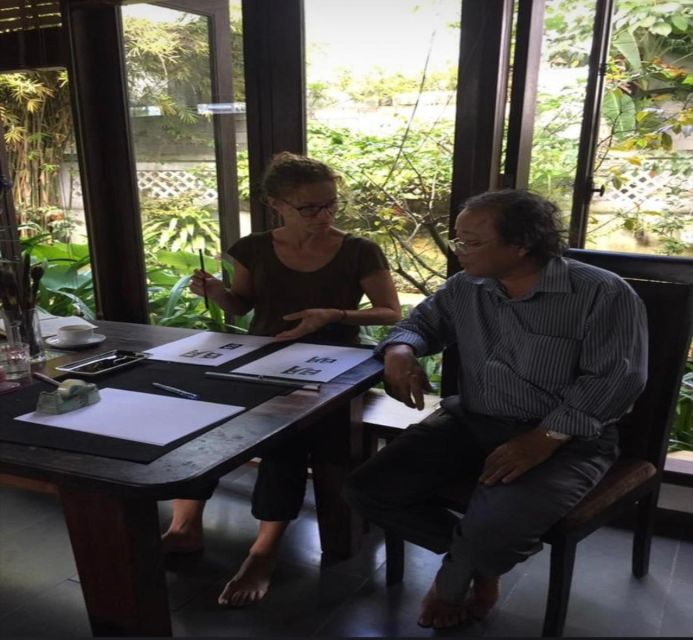
At the end of the course, the local calligrapher creates a calligraphy work on rice paper with your name or an idea of your choice. This is presented as a gift.
That personalized piece is one of the strongest reasons to consider the class. Your own practice artwork shows what you learned, while the calligrapher’s work gives you a more polished keepsake. You can request your name or another idea, but the available information does not promise a particular character, style, size, or design.
This also makes the activity a good choice for friends and families who want a souvenir tied to the people on the trip. A name written in Vietnamese calligraphy has a stronger connection to the place than a generic shop purchase.
You should keep the rice paper flat and protected after the session. No carrying tube or packaging is listed, so bring a little care into your plans for the rest of the day.
Is two hours enough?
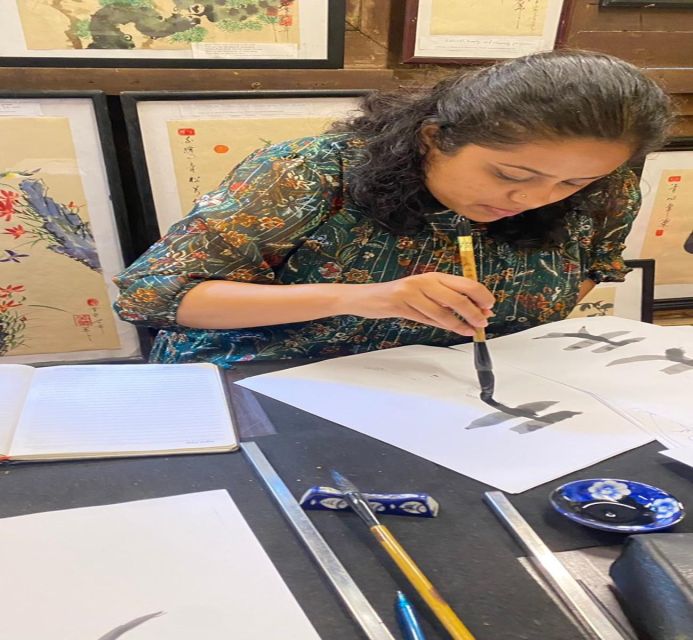
Two hours is enough for an introduction, guided practice, painting, tea, and the personalized gift. It is not enough to become skilled at Vietnamese calligraphy. Go in expecting a cultural workshop, not a formal art qualification.
The compact length works well for most itineraries. You do not need to give up an entire day, and you can fit the class around sightseeing in Hoi An. Check the available start times when booking because the schedule can affect how easily you combine it with other plans.
A short class also keeps the activity accessible to people with different attention spans. Children and first-time artists may enjoy the change of pace, while experienced artists should see it as a cultural introduction rather than advanced instruction.
The class is unavailable on the 13th and 28th of each month. Check the date carefully before building your Hoi An schedule around it.
What the $296 price means for value
At $296 per person, this is an expensive two-hour activity. The price includes the English-speaking guide, traditional tea, art materials and tools, and the special gift. It does not include transportation, food, or drinks beyond the included tea.
The small group and one-to-one help add value. So do the traditional materials and the personalized calligraphy work. If you care about meeting a local artist, learning the background of the art, and taking home something made for you, the cost may fit your priorities.
For a family, though, the total rises quickly because the price is charged per person. A family looking mainly for a low-cost craft activity should compare this with other Hoi An workshops before booking.
I would also pay close attention to the displayed currency and final booking total. The supplied price is listed as $296 per person, which is high for the length of the session. Confirm the amount before payment so there are no surprises.
The free cancellation policy helps reduce some planning risk. You can cancel up to 24 hours in advance for a full refund, and the reserve-now, pay-later option lets you hold a place without paying immediately. Those policies do not change the cost, but they help if your Hoi An plans are still moving around.
Who will enjoy this class most?
I would recommend this activity to you if you want a quiet, hands-on cultural experience in the Old Town rather than another sightseeing stop. It is especially suited to:
- Families looking for a creative activity they can share
- Friends who want a personal souvenir
- First-time artists who appreciate patient instruction
- Visitors interested in Vietnamese language, writing, and traditional art
- Anyone who prefers a small group to a large organized tour
It may not suit you if you want a full-day experience, a low-cost activity, or a highly technical art course. The class is also not suitable for wheelchair users or people with mobility impairments, based on the stated restrictions.
The teacher’s English ability is an important plus. You need clear explanations to understand how characters are designed and how to control the pen. The available information describes the teacher as genuine, interesting, fun, talented, patient, and funny, but it does not provide a name.
Practical planning for the day
Wear something comfortable for a seated art class and avoid arriving with a rushed schedule. Ink and art materials are central to the lesson, so follow the teacher’s instructions about handling them.
Plan your own transport to 33 Nguyen Thai Hoc Street. Pickup and drop-off are not included, but the activity ends where it begins, which makes the return simple.
The experience is offered in English and has a maximum group size of eight. Pets are not allowed. Food and additional drinks are not included, so plan those separately.
If you are booking close to a festival, holiday, or a specific date in your itinerary, check availability and the calendar restriction carefully. The class does not operate on the 13th or 28th of each month.
Should you book the Hoi An calligraphy class?
Book it if you value personal instruction, traditional materials, and a keepsake made with your name or idea. The best parts are the cultural explanation, the chance to practice ancient and modern Vietnamese calligraphy, and the patient small-group setting.
Think twice if the $296 price feels out of proportion to a two-hour workshop. You are paying for the local artist’s time, materials, tea, and personalized work, not for transport or a full meal. For the right person, that personal connection makes the cost worthwhile. For everyone else, Hoi An offers plenty of cheaper ways to fill two hours.
FAQ
Where does the Vietnamese calligraphy class begin?
The class begins at the Museum of Folk at 33 Nguyen Thai Hoc Street in Hoi An.
Where does the activity end?
The activity ends back at the meeting point at the Museum of Folk.
How long does the calligraphy class last?
The experience lasts two hours.
Is the class conducted in English?
Yes. An English-speaking guide leads the activity.
How many people can join the class?
The class is limited to eight participants.
What materials are included?
Art materials and tools are included, including a fur pen, Chinese ink, and traditional Vietnamese Do rice paper.
Is tea included?
Yes. Traditional Vietnamese tea is included. Food and other drinks are not included.
What do I take home from the class?
You create your own calligraphy artwork, and the calligrapher also gives you a rice-paper calligraphy work featuring your name or an idea.
Is the class available every day of the month?
No. The experience is unavailable on the 13th and 28th of each month.
More Hands-on Workshops in Hoi An
- Hoi An: Vietnamese Coffee Culture and Coffee Making Class
★ 4.9 · 4,006 reviews - Hoi An: Vietnamese Foldable Lantern Making Class
★ 4.9 · 3,742 reviews - Cooking Class Hoi An:Local Market, Basket Boat, Fishing & Cooking
★ 5.0 · 3,660 reviews - Hoi An Cooking Class(Market,BasketBoat Crabfishing&Cooking Class)
★ 5.0 · 3,386 reviews
Just added in Hoi An
- Hoi An: Ylang Ylang Spa Experience (Free pick up for 2pax++)★ 4.5 · 17 reviews
- Vietnamese Cooking Class with Local Family in Hoi An★ 4.9 · 20 reviews
- Hoi An Countryside Bicycle Tour : 25 Km Real Vietnam★ 5.0 · 12 reviews
- Vietnamese Coffee Making Class in Hoi An★ 5.0 · 4 reviews
- Vegetarian Cooking Class with Local Family in Hoi An★ 4.6 · 5 reviews
- Vegetarian Cooking Class W Optional Basket Boat from Hoi An★ 4.5 · 5 reviews
- My Son Sanctuary Private Tour – Early Morning or Half Day Tour★ 5.0 · 15 reviews
- Traditional Vietnamese Cooking Class in Leina Cookery★ 5.0 · 12 reviews
Hoi An Ancient Town Walking Tours, compared.
The Lantern Lady: Traditional Lantern Class in Old Town
Read our review →

Hoi An Night Market – Ancient Town street food tours by Night
Read our review →
Hoi An Ancient Town – Night Market Street Food Tours By Night
Read our review →

Browse the lists this tour appears in