
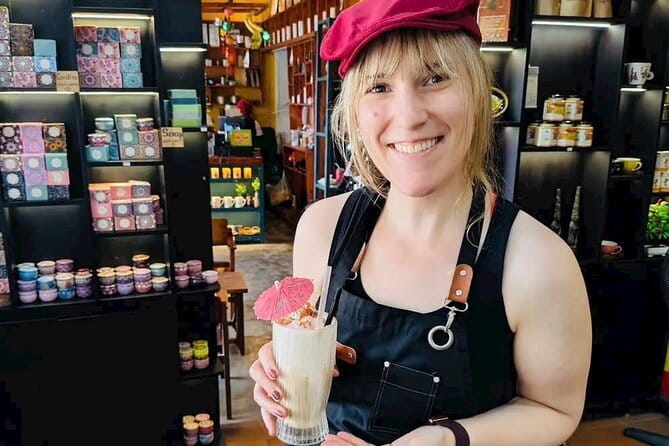
Reviewed · HOI AN COFFEE MAKING CLASSES
Authentic Vietnamese Coffee Making Experience in Hoi An
Vietnamese coffee is not just strong coffee poured over ice. This two-hour Hoi An class shows you four distinctive styles, from the slow drip of a phin filter to the creamy surprise of egg coffee. You choose two to make, then drink what you prepare.
I like the hands-on format and the useful recipes you take home. I also like the chance to hear about Vietnamese beans and coffee culture while learning a skill you can repeat in your own kitchen. The main catch is simple: the standard booking includes two coffee types, not all four, so choose carefully.
The class meets at 88 Đường Phan Chu Trinh in Minh An, returns to the same place, and costs $18 per person. Pickup is not included. The location is near public transportation, and you should provide a WhatsApp number when booking so the operator can contact you.
Key points at a glance
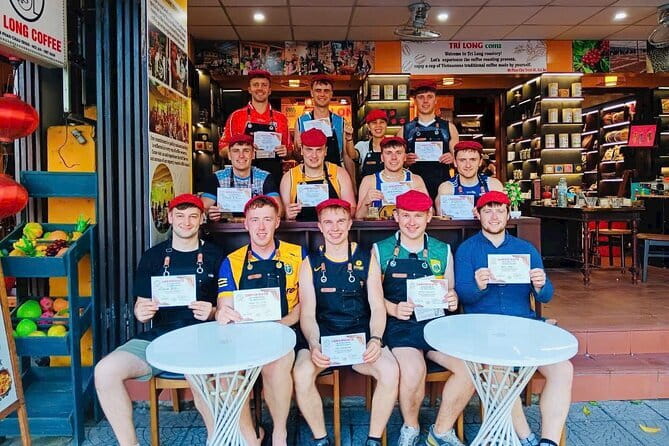
- Choose two coffee styles: Pick from phin filter, egg, coconut, and salt coffee.
- Learn from an English-speaking instructor: Van and David are among the instructors named in class feedback.
- Make drinks, not just watch: You prepare the coffees with supplied tools and then taste the results.
- Take the class home: Your recipe, coffee-making certificate, and coffee or tea are included.
- Central Hoi An meeting point: Start and finish at 88 Đường Phan Chu Trinh, with no hotel pickup.
- Good value at $18: The price covers a two-hour lesson, ingredients, equipment, drinks, and take-home material.
Why Vietnamese coffee deserves a class
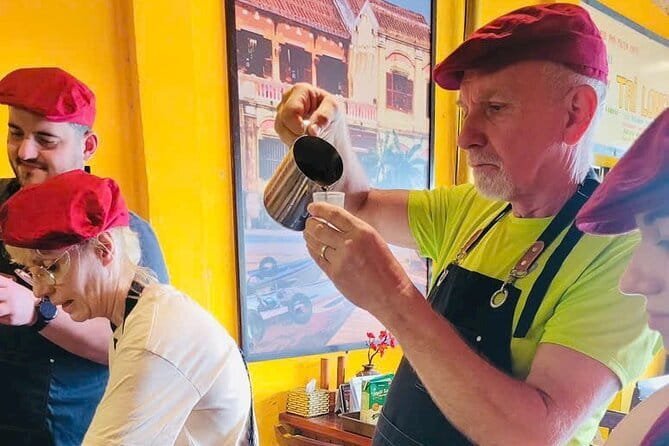
Vietnamese coffee has a character all its own. The familiar metal phin filter sits directly over your cup and lets coffee drip slowly, producing a concentrated brew with a bold taste. It is a small device, but using it well takes a bit of patience and attention.
That slow drip is useful cultural context, not just a preparation trick. You see why Vietnamese coffee often feels like a ritual rather than a quick caffeine stop. The class gives you a chance to understand the method before moving into the more unusual drinks.
You also get a look at different beans native to Vietnam. The information provided does not specify a particular coffee-growing region or bean variety, so do not expect a full farm visit or roasting workshop. This is a preparation class, with the emphasis on making and tasting finished drinks.
More coffee making classes in Hoi An:
- Hoi An: Vietnamese Coffee Culture and Coffee Making Class
★ 4.9 · 4,006 reviews - Vietnamese Culture and Coffee Making Class
★ 5.0 · 497 reviews - Hoi An: Vietnamese Coffee Making Workshop at Local Roastery
★ 4.8 · 174 reviews
Arriving at 88 Đường Phan Chu Trinh
The class begins at 88 Đường Phan Chu Trinh in Minh An, Hoi An. It ends at the same meeting point, which keeps the plan easy to manage before or after time in the old town.
There is no included pickup or drop-off. You need to make your own way to the address, but the location is near public transportation. A mobile ticket is provided, and confirmation arrives when you book.
Give the operator your WhatsApp number during booking. That is a practical detail worth handling early, since it provides a direct way to contact you about the meeting arrangements.
The activity is listed for a maximum of 50 people. That is a fairly large possible group for a hands-on class, although the actual class size may be smaller. If you want close personal attention, arrive ready to participate and speak up when you need help.
Starting with the phin filter

The phin filter is the foundation of the class. Your instructor demonstrates how coffee is placed into the small metal filter, how the press is set, and how water is added so the brew drips into the cup below.
The pace is deliberately slow. You cannot rush a phin in the same way you might hurry a machine-made espresso. That waiting time gives the instructor room to explain the method and gives you a chance to see how the coffee changes as it passes through the filter.
For a first visit to Vietnam, this is one of the most useful parts of the lesson. Egg, coconut, and salt coffee are memorable specialties, but the phin method is the everyday technique that connects many Vietnamese coffee drinks.
The practical benefit is that the equipment is simple. You learn with coffee-making tools provided during class, and the recipe for the drinks you make goes home with you. The certificate is a pleasant extra, but the recipe is likely to be more useful after your trip.
Egg coffee: dessert and coffee in one cup
Egg coffee is the most distinctive choice for many people. The drink combines coffee with egg yolks, condensed milk, and sugar, creating a creamy topping with a soft, dessert-like texture.
The instructor shows you how the mixture is whipped into shape. That step matters. The appeal is not simply adding an egg to coffee. It is the smooth, airy texture and the contrast between the sweet topping and the strong coffee underneath.
If you normally take your coffee black, egg coffee may seem like a big change. If you enjoy custard, condensed milk, or sweet coffee, it is an easy choice. The class gives you a chance to make it yourself rather than simply ordering a finished cup at a café.
Egg coffee also makes a good partner for the phin lesson. You learn the basic drip method, then use the coffee in a more elaborate drink. Several class participants have chosen egg coffee along with salt coffee, and that pairing lets you compare sweetness with savory balance.
A completely different side of Hoi An:
- Hoi An: Basket Boat Ride in the Coconut Forest
★ 4.9 · 4,956 reviews - Hoi An: Vietnamese Foldable Lantern Making Class
★ 4.9 · 3,742 reviews - Cooking Class Hoi An:Local Market, Basket Boat, Fishing & Cooking
★ 5.0 · 3,660 reviews - Hoi An Cooking Class(Market,BasketBoat Crabfishing&Cooking Class)
★ 5.0 · 3,386 reviews
Coconut coffee for a cooler, tropical taste
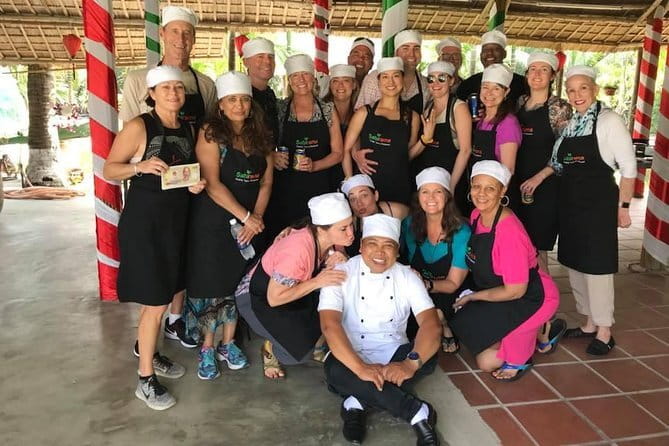
Coconut coffee brings a nutty sweetness and a tropical note to the cup. The class explains how to combine coconut with coffee so the result is aromatic and refreshing.
This is a useful pick if you want something less traditional in taste but still tied to local ingredients and café culture. It can be a good choice on a warm Hoi An day, especially if you prefer a lighter, sweeter flavor profile than straight phin coffee.
The available details do not specify the exact coconut ingredients, serving temperature, or blending method. Those details may depend on the instructor and the class setup. You should expect a lesson on making coconut coffee, but not a fixed promise about a particular presentation.
Salt coffee and the science of less bitterness
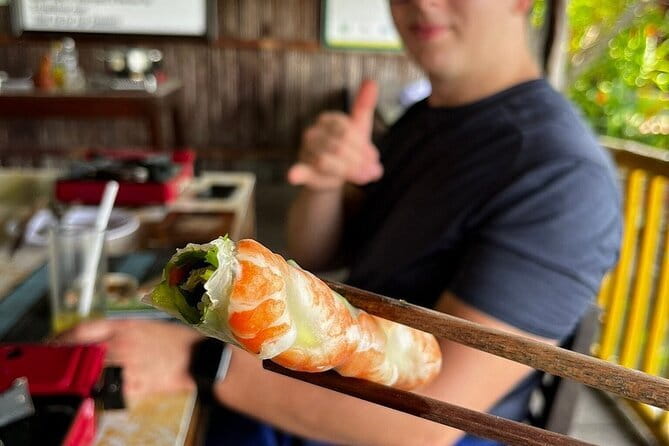
Salt coffee sounds odd until you taste the reason behind it. A small amount of salt can soften bitterness and bring out other flavors in coffee. The class explains that balance instead of treating salt as a novelty.
This is perhaps the best choice for someone who wants to experiment. The drink does not aim to taste salty. The point is a measured addition that changes the overall cup.
Salt coffee also makes a useful comparison with egg coffee. Egg coffee leans sweet and creamy, while salt coffee focuses on balance and flavor contrast. Making both lets you see how a few simple ingredients can alter the same basic coffee.
Pay attention to the amount used. The class is valuable partly because an instructor can show you how restrained the addition should be. At home, a heavy hand could turn an interesting drink into an unpleasant one.
Choosing your two coffees
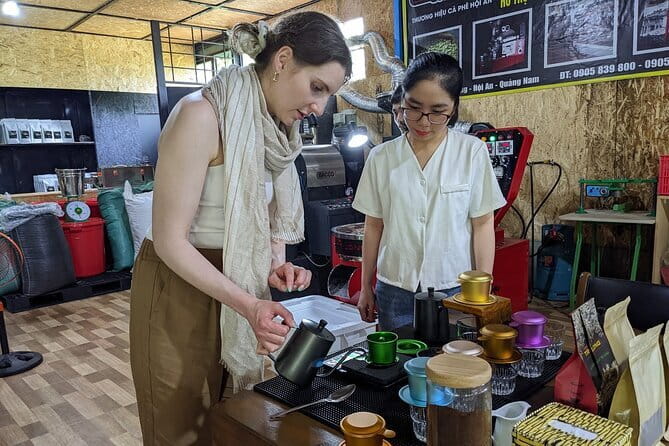
The booking information says you choose two types of coffee. Your options are phin filter coffee, egg coffee, coconut coffee, and salt coffee.
I would choose based on what you want to learn:
- Pick phin filter and egg coffee for the clearest introduction to Vietnamese coffee.
- Pick egg and salt coffee for the biggest contrast in taste.
- Pick coconut and salt coffee if you want to try less familiar flavor combinations.
- Pick phin and coconut coffee if you want one traditional method and one sweeter variation.
Some class experiences have involved couples making two coffees each, which can produce four drinks between two people. That does not change the stated individual choice of two types, so you should not book expecting to personally prepare all four.
If you are attending with a partner, compare your choices before the class. Selecting different drinks can give you a broader tasting, while choosing the same two lets you compare technique and results.
A friendly, practical teaching style
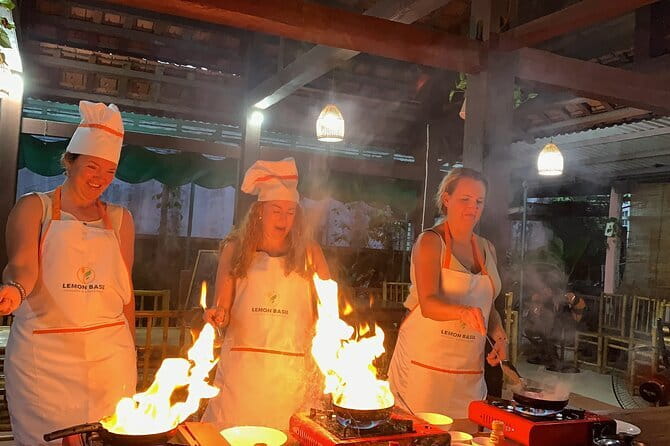
The instructor speaks English and explains both the coffee and the method. Van and David are names associated with the class, though your booking does not guarantee a particular instructor.
The teaching style appears relaxed rather than rushed. You get an explanation of Vietnamese coffee culture, guidance with the preparation, and time to make and taste the drinks. That is important in a short class. A lesson that only demonstrates the process would be less useful than one that lets you handle the equipment.
The atmosphere is described as friendly and atmospheric, with enough time to ask questions. Still, the possible maximum of 50 people means the degree of personal attention can vary. If you need a close demonstration, position yourself where you can see the instructor and ask for clarification.
This experience suits curious beginners especially well. You do not need advanced coffee knowledge. Coffee enthusiasts will find the regional preparation styles interesting, while casual drinkers can enjoy an easy cultural activity that does not require a full day.
What the $18 price includes
At $18 per person, the class offers solid value for a two-hour activity. The price includes the coffee-making tools, an English-speaking instructor, the coffee or tea served during the session, a certificate, and the recipes for the drinks you make.
The key value is the combination of instruction and ingredients. You are not paying only for a tasting. You learn how to prepare two drinks and leave with written instructions that can help you recreate them later.
The certificate is less important for most people, but it adds a small souvenir. The recipe is the real take-home benefit. It turns the class from a one-time café experience into something you can repeat after Vietnam.
You should still account for transport to and from the meeting point. Pickup and drop-off are not included, and any additional food or drinks outside the listed inclusions are also not part of the stated price.
Timing the class in Hoi An
The activity lasts about two hours. That is long enough for an explanation, demonstrations, preparation, and tasting without taking up an entire morning or afternoon.
Because the class takes place indoors or in a coffee-making setting, it can be a useful break from walking around Hoi An. One practical tip is to avoid the hottest part of the day if possible, particularly since the meeting point is easy to reach and you may be walking or using public transportation.
The experience ends back where it starts. That makes it simple to connect with another Hoi An activity, though you should allow enough time to find 88 Đường Phan Chu Trinh before the start time.
Free cancellation is available if you cancel at least 24 hours before the local start time. Cancellations or changes made inside that window are not accepted for a refund.
Who should book this coffee class
I would recommend this class to anyone who wants a short, hands-on cultural activity in Hoi An. It is especially suitable for coffee lovers, couples, and people who like taking home a practical skill instead of another ordinary souvenir.
It is also a good fit for beginners. The class does not assume that you know how to use a phin or understand the balance of salt coffee. The English-speaking instructor provides the explanation and tools.
Families and larger groups may enjoy it too, but the possible maximum of 50 people is worth noting. If you prefer a very small workshop with constant one-to-one instruction, this may not be the best match.
You may want to skip it if you dislike sweet coffee, condensed milk, egg-based toppings, or experimental flavors. The basic phin coffee is more traditional, but the class is built around exploring several styles, not just drinking plain black coffee.
Should you book it?
Book this experience if you want to understand why Vietnamese coffee is more than a strong brew. For $18, you get two hours of instruction, two chosen coffee styles, ingredients, equipment, recipes, and a certificate, with a central Hoi An meeting point.
I especially like the combination of phin coffee with either egg or salt coffee. It gives you a solid traditional base and one memorable variation. Coconut coffee is a good alternative if you prefer a sweeter tropical flavor.
Just remember the two-choice limit, arrange your own transport, and send a WhatsApp number with your booking. If those details suit your plans, this is an easy, useful addition to a Hoi An itinerary.
FAQ
How long does the Vietnamese coffee class last?
The experience lasts approximately two hours.
Where does the class begin?
The class begins at 88 Đường Đ. Phan Chu Trinh, Phường Minh An, Hội An, Quảng Nam, Vietnam.
Where does the activity end?
The activity ends back at the meeting point.
Which coffee types can I choose?
You can choose two types from Vietnamese phin filter coffee, egg coffee, coconut coffee, and salt coffee.
Is hotel pickup included?
No. Pickup and drop-off are not included.
What is included in the price?
The price includes coffee-making tools, an English-speaking instructor, a Vietnamese coffee-making course certificate, the recipes for the coffees you make, and coffee or tea.
Can I cancel for a full refund?
Yes, if you cancel at least 24 hours before the experience start time. Cancellations or changes made less than 24 hours before the start time are not accepted for a refund.
Just added in Hoi An
- Hoi An: Ylang Ylang Spa Experience (Free pick up for 2pax++)★ 4.5 · 17 reviews
- Vietnamese Cooking Class with Local Family in Hoi An★ 4.9 · 20 reviews
- Hoi An Countryside Bicycle Tour : 25 Km Real Vietnam★ 5.0 · 12 reviews
- Vietnamese Coffee Making Class in Hoi An★ 5.0 · 4 reviews
- Vegetarian Cooking Class with Local Family in Hoi An★ 4.6 · 5 reviews
- Vegetarian Cooking Class W Optional Basket Boat from Hoi An★ 4.5 · 5 reviews
- My Son Sanctuary Private Tour – Early Morning or Half Day Tour★ 5.0 · 15 reviews
- Traditional Vietnamese Cooking Class in Leina Cookery★ 5.0 · 12 reviews
Hoi An Coffee Making Classes, compared.

Vietnamese Coffee Culture and Coffee Making Class
Read our review →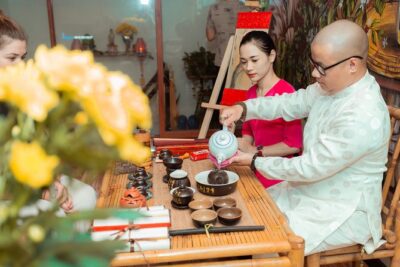
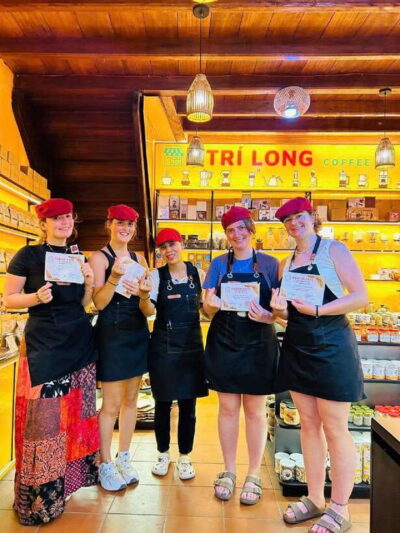
Vietnamese Coffee Making Workshop at Local Roastery
Read our review →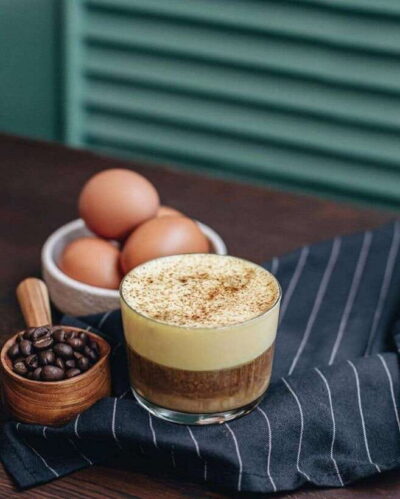
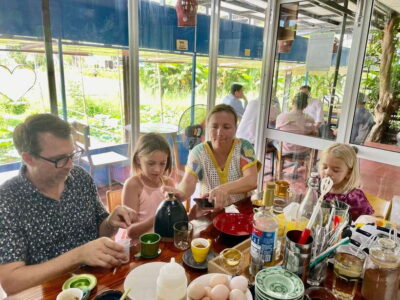
Hands-on Vietnamese Coffee Making Class with Long
Read our review →
Unique Lantern and Coffee Making Class in Hoi An
Read our review →
Hoi An Fishing Tour Private-Lantern /Cafe Making Class by Lunch
Read our review →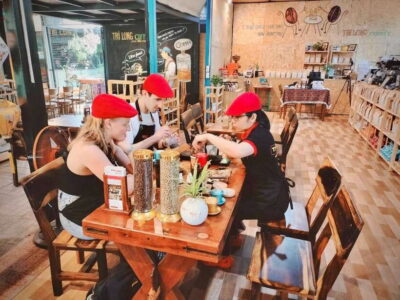
Browse the lists this tour appears in